
Tween, Teen, and Young Adult Motivation; Helping Gen Zers Identify and reach their goals with Special Guest Dr. Melanie McNally
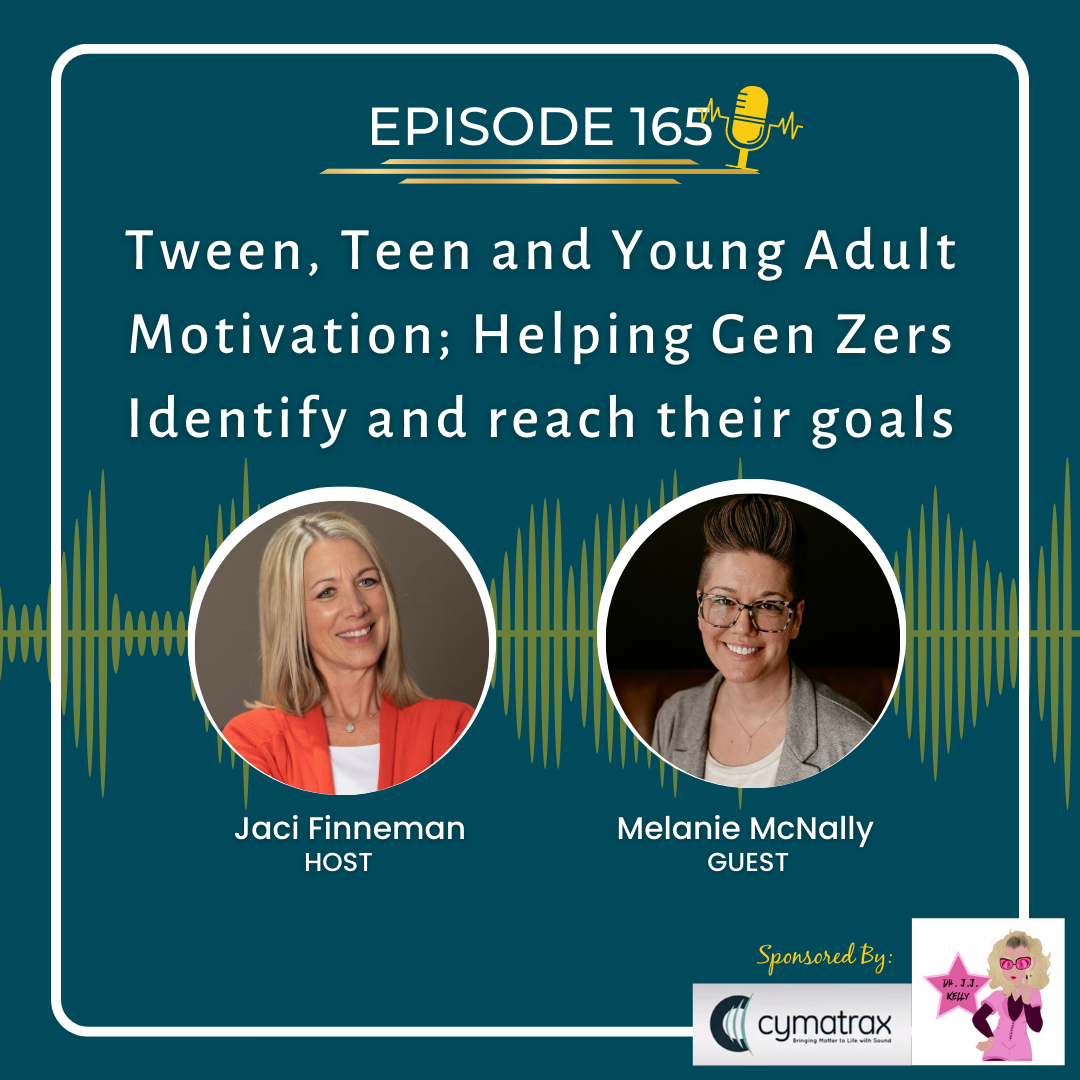
About this episode
Welcome Back No-Problem Parents!
In today's episode, where we dive into the world of motivation and goal-setting specifically tailored for tweens, teens, and young adults. Join us as we explore the unique challenges faced by Generation Z and discuss effective strategies to help them identify their aspirations and navigate the path to success.
Become a No Problem Parent Today!
Full transcript
Digital Audio Health by Cymotrax. Welcome to the No Problem Parenting Podcast. Hey there, parents. Did you know there's a way to transform your kids' behavior?
That's right. I'm a parenting coach and strategist, and we're going to seek first to understand why your kids are behaving the way they are, so we can really go deeper with your own behaviors and what is happening in your relationship with your kiddos from the inside out to take the actions and steps necessary to problem solve and transform your parenting so that you can become the confident leader your kids crave you to be.
I promise you there is a solution for your parenting problems. Hey there, I'm Jackie Finnaman and after 30 years and more than 50,000 hours of working with countless kids and families ranging from the severe behaviors that required out-of-home placement to the, ah, she just doesn't listen to me anymore behaviors. There is a solution when you, the parent, feel confident. When you don't feel the need to rescue your kids and you aren't losing your cool and yelling all the time, your kid's behavior improves and your kids trust you.
They trust that no matter what they're going through, you are gonna help them get through it. No Problem Parenting supports and teaches parents how to be the best leader and advocate for your child. If you feel like no matter how nice you are or how strict you are, your kiddos are still struggling, it's time to get off the struggle bus and become the confident leader your kids crave you to be. Join me on this journey of behavioral strategies and resources so that you can feel empowered as a parent again and turn your everyday parenting problems into no problem. All right, welcome back No Problem Parents. Today my guest is Dr. Melanie McNally.
She is a licensed clinical psychologist and adolescent life coach who helps Gen Zers step into a version of themselves that is aligned with their values and goals. She provides one-on-one coaching, self-guided courses, and books that combine personal development, life coaching, cheerleading, and accountability to help your tween, teen, or young adult discover who they truly are. Dr. Melanie uses her 17 years of experience working in the mental health field and 10 years working specifically with adolescents to help them build self-confidence, set and reach goals, and promote mental wellness. She's created an experience that will promote mental well-being and help Gen Zers feel energized, invigorated, and excited about their lives. This is a hot topic right now with many of our teens kind of hanging out on the couch, not feeling motivated, not really understanding like their direction in life, where they should be moving. So I'm super excited to have you on the show. Welcome, Dr. Melanie. Thank you. And I'm so excited to be here talking about this because I agree it is a big, big issue that we're seeing more and more of lately.
Yeah. And you know, like me, you kind of, while you still have some therapy clients, some, some folks that you're doing therapy with, you're mostly doing the coaching, life skills coaching and motivation coaching and things like that. So tell me a little bit about your experience and why you transitioned into the coaching field? Yeah, so I've been, you know, I've been working, doing therapy with adolescents for a long time, and I absolutely loved my therapy clients and loved working with them.
But I started running into a lot of roadblocks where teens, you know, in therapy, if they don't want you to share something with their parent, and it's not absolutely clinically necessary that the parent knows about that information. they have the right to decline you sharing. And so I would run into a lot of roadblocks where teens just didn't want me sharing information with their parents, but this would be information that would be really beneficial and it would really help move the team forward. And I was starting to just get really frustrated with that. And I started thinking about coaching from that realm, first of all, because teens don't exist in a vacuum. You need parental involvement. And with coaching, you can really have that level of involvement as long as there's transparency.
You know, I obviously don't go behind anyone's back or talk secrets or anything like that. But with coaching, I'm able to, you know, from the start, I'm able to explain to the teen and the parent, you know, the parents are going to get weekly progress reports. They're going to know what we're working on. I include in there how they can support and help you.
I can meet with the parents in between sessions. So there's a lot more of that involvement. So that was like the huge, the major driving force. Another thing with therapy that I was really frustrated with is that you just have your weekly sessions and that's it.
And so you meet once a week. And if they, let's say they ran into a roadblock, you know, they're, they're practicing some sort of self-regulation tool and they ran into a roadblock where they couldn't do it. So you have to wait a full week to see them again. And they're just like, oh, it didn't work.
Here's why. and now we have to kind of start over again. But with coaching, I can have in-between session communication so I can follow up and say, hey, how's it going with your self-compassion journaling? You know, are you able to do it?
Are you running into any issues? And then they were able to say, oh, I'm actually a little confused. Am I supposed to do it like this or like this? We can troubleshoot it right there on the spot.
And now they can continue working on that before our next session. So we're not losing any of the groundwork. So those were like the two big driving forces that pushed me over into the coaching field. Pre-pandemic, I had already started doing teletherapy at that point.
And so it was actually very convenient because I had all of the infrastructure set up already. So when the pandemic hit, I could transition everyone over. But what I found with the teletherapy or with virtual coaching sessions is that when there's a screen between us, teams actually open up more. They aren't as vulnerable.
They're not as embarrassed to share certain things. It just, I was really surprised because I actually was a little worried when I first started that it would cause them to close down more. And then when I found, I mean, I had this one teen girl that I was working with. I had been seeing her for like eight months and she was really guarded.
It was really hard to get information out of her. We weren't moving forward at all, or we were, but it was just such teeny tiny baby steps. We had one teletherapy session and that one teletherapy session, she ended up sharing more about her life than she had in those eight months. And that was such an eye-opening experience where I was like, it was because she, she didn't feel judged.
And she didn't, even if I'm trying not to be judgmental and you're sitting across someone and you're just staring at each other and you're both sitting in chairs, there's like a certain, just a judgment that comes with that where a teen's going to feel like I'm doing everything wrong. And this person's here to like, make me feel bad about it. Whereas on camera and there's a screen, there's not that sort of like intimidation there.
Right. Yeah. I love that. And for some kids in person is great and they have no problem with that.
And for others, it's like this walk of shame going into the therapy office. Yes, totally. And so Zoom is great. All right, well, let's get into our discussion today about how to motivate our teens, how to either increase their motivation or just to find motivation in general if they're kind of stuck and been isolating.
I think COVID exasperated that for some of our kids. So what can or how can a parent motivate their teen? So it's helpful to think about motivation as being made up of three different skill sets. So it's made up of drive, grit, and goals.
And what we really need to do is we need to look at which area the teen might be struggling in. So drive, for example, is made up of curiosity, passion, purpose, autonomy, and mastery. So if a teen isn't curious about much, you know, if they don't have any passions, or if they don't have a sense of purpose in life, they might really be struggling in the area of drive. Or if they lack control, then maybe they're struggling in the area of autonomy.
So we want to look at, you know, is it that area of drive that's really hard for them? Grit, one of the other skill sets that's important is a teen's ability to persevere towards something that they're passionate about or being able to stick with something that's really meaningful to them and to stick with it long-term. So some teens, they've got the drive, but they don't have the grit. They don't have the ability to stick with it. So we want to see, is that the issue that they're struggling with? And then the final skill set is goals. And so that's your teen's ability to break down huge goals into really small, tiny ones. And so your teen might have the drive. You You know, they might have that purpose.
They might have the grit. But then when it comes to goals, they have no idea what their next steps are going to be. They don't know how to break them down. So they're just kind of like wandering around or they're switching directions constantly.
So it's really helpful to look at it in these separate components and then figure out, okay, which area is my teen struggling in? And then we know what we need to do to actually help them. Well, that's awesome. And it makes me think of even like with drive, grit, probably driving grit primarily, but that negative mindset that's, we struggle with that as adults, right?
That sometimes those negative messaging, the negative messages that we have that maybe came from, you know, a parent or a teacher or friends or lack of friends or not good friends, right? Growing up that we have these stories that we tell ourselves and we get really kind of caught in the weeds and just stuck. And so I can see how I can understand how like helping them with curiosity and discovering what their purpose or their passion is, is a great start. And then how to teach them to not just through affirmations and things, but really how to change that negative story or that negative mindset. Yeah. I'm glad you're bringing up mindset because that actually what research shows is mindset really is an important factor when it comes to curiosity,
passion, and grit, that mindset really does make a difference. So, and this is a, this is this one story I love, but where, you know how you'll, you'll see a lot of graduation speeches where they're talking about find your passion, just find your passion and you'll be happy in life. and that creates this mindset that once I find my passion, everything's going to be easy. It's effortless. It's fun, but what we know of is that even if we're passionate about something, things still require grit. They're still going to get really boring. They're going to be really hard.
We're going to have self-doubt, so our mindset on how we think about our passions will impact our ability to stick with it. So research shows that if a teen has more of a growth mindset when it comes to passions and they understand that there's something that needs to be cultivated and maintained, then they're going to have that grit to stay with it. So the mindset component is actually really important. I'm glad you brought that up. Yeah, I just, it's kind of a hot topic now, even with adults. And I think, you know, with all the coaching that many of us adults do, just for life coaching, business coaching, all those things. So often it comes down to mindset, whatever skill you're trying to learn or unlearn, a lot of it has to do with mindset. And I think,
why not start with our teens? Let's talk about what if your kiddo is just absolutely not showing any interest in anything? How do you kind of get your teen to get off their phone and they're gaming and spark some curiosity or interest. Yeah, I see this a lot too with the teens and the young adults that I work with. So I always tell parents that first of all, change has to start with them. So first the parents have to look at their own behaviors and what they're modeling at home. You know, as a parent, are you scrolling when your kid's talking to you? Are you pulling out your phone whenever you have to wait in line or even at a red light? You know, is your phone the last thing you're looking at at night or the first thing you're checking in the morning.
So if those are all yeses or if most of those are yeses, then the parent really needs to make some major changes first and create a home culture where screens are a last resort rather than the default. So that can help, you know, just starting went from the top down, you know, turning off notifications so you're not always being pulled towards your phone, leaving your phone to charge in the kitchen at night instead of in the bedroom, turning it off during family dinner time, things like that. But then we also want to make teens or we want to help teens have other options, you know, things other than scrolling and gaming. So we want to make sure that friends, activities, clubs, time outdoors, that those things are all accessible for them.
and so we have to consider you know how easy is it for my teen to join a club at school or to go hang out with friends because depending on where you live that might be real a really big challenge and we can't expect them to do these things if they don't have access to a car or it's not safe or your school doesn't have a lot of clubs so you have to think about those things otherwise they're just going to be really frustrated when you start telling them they have to do this stuff But if parents set some serious limits on screen time, and then they make sure that they have access to different activities and clubs and friends, then they let the teen find a way to entertain themselves within those parameters.
As long as you've given them access to those things and they can do it safely, then I suggest leaving it up to them to follow their curiosities and to see where those curiosities lead them. Because curiosities will turn into passion. Passion will turn into purpose. And those things are going to drive them and motivate them to keep going.
But if they don't have the space and the time and the opportunity to even explore curiosity, then how can we expect them to develop the passion and the purpose? That's such a good point. And I think sometimes as parents, we encourage our kids to do the activities or the things that we were interested in or that we, you know, we want them to to join or be a part of. And sometimes our kids are going the opposite direction.
I mean, we were baseball fans and when our kid, and we liked watching hockey, but we had never thought our kid would be a hockey player, much less a goalie. You know, we, that was what he wanted to pursue. And so we did kind of hoping that it wouldn't go well. And it ended up not only going well for him, it became a passion of his and even beyond high school now.
And it's like, as a parent, sometimes you want to be like, oh, you're never going to make it that far in that sport. So, you know, it feels like we shouldn't be encouraging you to pursue it. Like you're saying, allowing our kids to really dive into it and figure it out for themselves is so much better than when it comes from us. Yes.
Yeah. And, you know, and you bring up a good point too, when it doesn't align, when your, your kid's curiosity or passion doesn't align with the parent or what the parent wants for their kid. And I'll hear that from parents a lot where, oh, my kid only wants to play music. That's all they're interested in, but shouldn't they really be in sports?
And you can see that, okay, this is what the parent wants for their kid. But what we have to look at is that any passion that your teen has, we want to support it. As long as it's healthy and they're not hurting themselves or someone else, we want to support it, even if it seems completely ridiculous, or you have no clue how they would ever make a living and doing that as an adult. because that passion, they're going to figure out so much about themselves while they're exploring it. And they're going to figure out how to set goals. And maybe their goals are really unrealistic and big, but those goals have to be broken down. And along the way, they're going to achieve a lot of smaller things. And they're going to do a lot. They're going to figure out they've got grit.
They're going to find, you know, other passions along the way. So we really want to support their passions, no matter how different they might be from what the parent wants, because I've even seen the opposite thing happen where the parent, you know, they don't want them to pursue a certain passion. And the parent is so strong in their opinion that they actually push the teen even more into it. And then the teen isn't even really that into it anymore.
But now at this point, it's just turned into a power struggle and they waste so much energy on this thing that they're not even really that into anymore. but they just kind of want to prove it to their parent that they can do something different from them. And now they've missed out on like, you know, something that they really truly want to be doing. Yeah. That's a really good point as well. And again, it seemed with our son, like an unrealistic goal that he would pursue, you know, hockey after high school. And he ended up, you know, starting on a junior's league, even his senior year. And we allowed him to leave, you know, his in-person in school to pursue that because he did the work in finding the team and finding, you know, all the things which we encouraged, but again, never thought, you know, not that we didn't believe in our kid, but we just thought it wasn't going to be possible. And he was going to end up being super disappointed. And again, I think that's okay. Like when they have that ability to pursue those things and then it doesn't end in a great result, that's still such a great learning opportunity for them versus us just kind of saying, nah, it's not going to happen. So, you know, do something else. We want teens to have really big, massive goals, even if they seem unrealistic.
We really want them to have that because if you think about the opposite, a teen who doesn't have a goal, a teen who doesn't have something that they want to pursue, they don't have a dream. like no one wants that for their team. You want them to have those dreams, no matter how big and unattainable they might seem. And you want to understand that having that purpose is really good for their psychological wellbeing. It leads to so many other positive things. When we have a purpose, it, you know, if my purpose might be huge, my purpose might be to stop climate change as one person, like that's impossible for me to do. But if you think of all of the things that that's going to cause me to do along the way, and that's going to get me out of bed every day,
because I've got this purpose now, like, why wouldn't you want me to have that goal for myself and thinking about how that's going to, I can break that down. And now I can focus on each of these small steps. And then these small steps might lead me in a different direction. So having, you know, for a parent to encourage those things and then to help them break them down into smaller steps. So maybe your teen who loves theater and they want to become a famous actor and you're thinking, oh, that's never going to happen. You know, you're never going to be on TV. This is ridiculous. But thinking like, okay, this is, that's a great goal for you. So let's look at what are some things that you can do to start working on this now? Is that taking acting classes or going to theater camp? That's wonderful. Cause now look at now your teen has some structure for the summer. They're going to go off and they're going to make new friends, you know, okay, now you need to audition for a school play. Look at how great that is for your teen that they get to work on their performance and like talking in front of crowds, you know, so you're helping them figure out the little baby steps along the way as you're supporting them in this big grand goal. Yep. I love that. And sometimes it comes down to money as well. You know, oh, this is really expensive or, you know, how can mom and dad get you there when we're both working and the,
you know, you need to be there right after school or, you know, whatever it is. And it's like, that's problem solving that you don't just have to figure out on your own. You include your teen in that or preteen in that, and then help do some brainstorming. And maybe they need to make some phone calls to an aunt or uncle or neighbor or someone to see if they can get a ride, you know, or another kid that's in that, whatever that activity is. And I think that's so helpful rather than us thinking that as parents, we have to figure it all out. Like we can include our kids in those goals. And I also love that you're specializing in this too, Dr. Melanie, because sometimes parents want to do these things and they're trying to do these things with their kids and their kids aren't receptive or it ends up becoming a battle or, you know, just there's a lot of defense or resistance with it. So you're an external person that is there to support the teen and the parent and learning how to communicate and work together on some of those things. So I think that's super awesome as well. Now on the flip side, what if your teen has shown a little bit of interest and you're like, oh, thank God, finally something, you know, but you, you kind of become pushy about it and you know, you're nagging your kids all the time to pursue. Cause you've got this little carrot of this idea that your kid's interested in, but they're not really moving the
needle. And so you kind of become a bit overbearing. What kinds of things can parents do that? That's going to help the kid to reach their goals without being too pushy. Yes, that's another big one I see too. Yeah, the parents, they get so excited that their teen's interested and then they push so hard the teen's like all of a sudden like, whoa, I'm not that interested. But figuring out ways to follow your teen's lead, like really stepping back and letting them dictate the pace and then you're just following the lead. So if they're, you know, really into their goals and you want to support them, you can talk to them about how you might do that and what it might look like. But if they're not asking, you know, for you to help, if they're not really sharing that much with you, that's okay too. But start off by asking, you know, open-ended questions about how things are going, you know,
with that particular goal or what they're enjoying, what's hard about it, what's easy about it. and make these questions, you know, very open. You're not judging them or criticizing whatever their responses are. You're just listening because that's also going to help you figure out what their pace is and what they need from you.
Make sure that they know you're there to help when they need it, but let them work on it independently. And if you notice that there's things that they could be doing that would help and they're just not doing them, find ways to gently point out your observations. As long as you can do it in a way where it doesn't come across as being really critical or judgy, you know, so pointing out the little things of like, oh, hey, I know, you know, I heard you talking about wanting to run in that marathon next year. And I noticed there's a 5k going on, you know, next weekend, that might be something that would help you reach that goal. And you're just kind of putting it out there and you're dropping it, but you're not, you know, turning it into a lecture of like,
you haven't done anything yet to pursue this. And you say it's really important to you. now all of a sudden it's just turned into like an argument or a lecture and they've just turned their brains off. So you're just kind of like dropping little breadcrumbs, leaving them for them to, you know, pick up and follow and seeing what they do with it. And even if that's really, really hard to do, but those little breadcrumbs will also just help to, they, they do sink in, you know, a lot of times parents think that their teen isn't listening to them, but they really are.
and those little suggestions will get through to them. It just might not be on your timeline. And then another thing too, is that parents can watch some movies where people are working towards really big goals, like inspirational kinds of movies and just point out the main character's process. So this gets your teen to think about their own process a little bit, but since you're making it about the movie character, it's very safe because it's not about them.
So it doesn't feel personal. they don't feel attacked, but you notice like, oh, wow, look at how, you know, this person got really frustrated and how they managed it, how they had to like, they had to hire a coach at that point to help them, or they had to go and join a group of friends that were doing something similar. And then that made it a little bit more fun. And so you're pointing out these little things like the little struggles that might come up along the way and giving them some ideas on how they can handle them. I love it. And I do love that you have support for the teen and the parent.
You're really giving parents skills too, on how to approach their kiddos. I love that you use the word curiosity because it is so much is about being curious instead of sharing advice, you know, and I'll know always knowing the answer or thinking, you know, the answer kids are way more responsive to statements of I noticed, and I wonder then they are, you know, those kinds of telling statements. Yeah. And if, you know, if you remember what I, I know, I certainly remember what it was like to be a teen. Thank goodness. I saved all my journals from those years. Otherwise I probably wouldn't. But when I look back, I mean, the struggle is real as far as wanting independence.
And this is like such a universal part of just adolescent development, but they want independence. They want to figure things out on their own. And if you're there telling them every single step they need to take and how they need to take it, they're not getting to go through this crucial part of brain development that they crave emotionally, but also that they're craving psychologically. So you want to just, you know, no matter how hard it is to just try and take a couple steps back and allow them to have that.
Yeah, I think that's great. And I think some kids, depending on the type of personality or the style that your kid is, like I can think of some kids that are more defiant because they're defiantly independent. Right. And then you have those teens who are people pleasers and they're going to go along with what you're suggesting.
And you're going to think there's not a problem because you're saying, hey, I think college is the right track for you. Or I think, you know, this particular activity is the right track for you. And because they're a pleaser, they might, and they don't want you to be upset. They might go along with it.
And then years later, you're going to find they're not doing well and they're emotionally not doing well. And you're like, what happened? Well, maybe they were just trying to please you. And it really wasn't an interest of theirs.
So I think being aware of that is super important too. So you coach one-on-one with teens and of course, including parents in that, but you also have parenting workshops. So why don't you tell us a little bit about how the services work? Yeah.
So I have one-on-one coaching where I work, you know, one-on-one with teens and their parents, and that's very focused on, you know, specific goals that they're trying to reach. But also doing some like mental health coaching in there too, with decreasing anxiety and stress and learning how to self-regulate. I have self-guided programs for teens. So these are programs that they can go through at their own pace and they are filled with worksheets and a digital journal and there's videos.
And so those are focused on self-confidence. I have one on goal setting and then I have a therapy bootcamp that is all about creating really great mental health habits. And I have parent workshops. So these are workshops that parents can watch whenever they want.
There are videos and content on there that will help you with decreasing overwhelm or improving communication with your teen. I have a whole variety on there and I'm constantly creating new ones. And then there's even an option where you can email me if you have specific questions. So if you go through the workshop and you want to know something specific related to your situation, you can fill out a form and submit that to me and I'll get back to you.
And then I also have a few books. So I have a novel and a workbook that's out now. I have a book called The Emotionally Intelligent Teen that is coming out December 1st. And so that's for teens to help them build their self-awareness and develop self-regulation tools. And I am currently working on another book that will be out in the fall of 2024. And that one's for parents.
A lot of these workshops that you're offering are on your website are actually free for parents. Yes. Yep. A lot of them are free. And then, yeah, I do have a few paid ones, but then, like I said, I'm constantly adding new ones and we're always updating information and stuff like, and if there's something that a parent wants me to cover, they can always email me and, you know, put in a request. And I do consider those as well when I'm creating new parent workshops.
that is awesome I love it to learn more about how to work with you parents can go to destination you.net and teens can check it out as well and then they can follow you on instagram at drmelaniemcnally or connect with you at connect at destination you.net I love this I'm so happy that we've connected I really encourage parents of teens to reach out and connect with you dr melanie thanks so much for being with me on the show thank you so much for having me it was fun to talk about all of this. And, you know, parents, if you have any questions or issues, you can always feel free to reach out to me. I'm pretty accessible and ready to assist in whatever way I can. All right, parents, that's it for today. Make sure you head over to the website,
noproblemparents.com. Sign up to get our emails. We're going to be giving away tips, tools, techniques, and resources, updates on podcast episodes, roundtable events, and more. Check out noproblemparents.com. For now, hugs and high fives. You got this.
Become the confident leader your kids crave
The method, the community, monthly live Q&A with Jaci, and Celia — your AI guide in the moment.
Start your 14-day free trial Get it on iPhone or sign up on the web