
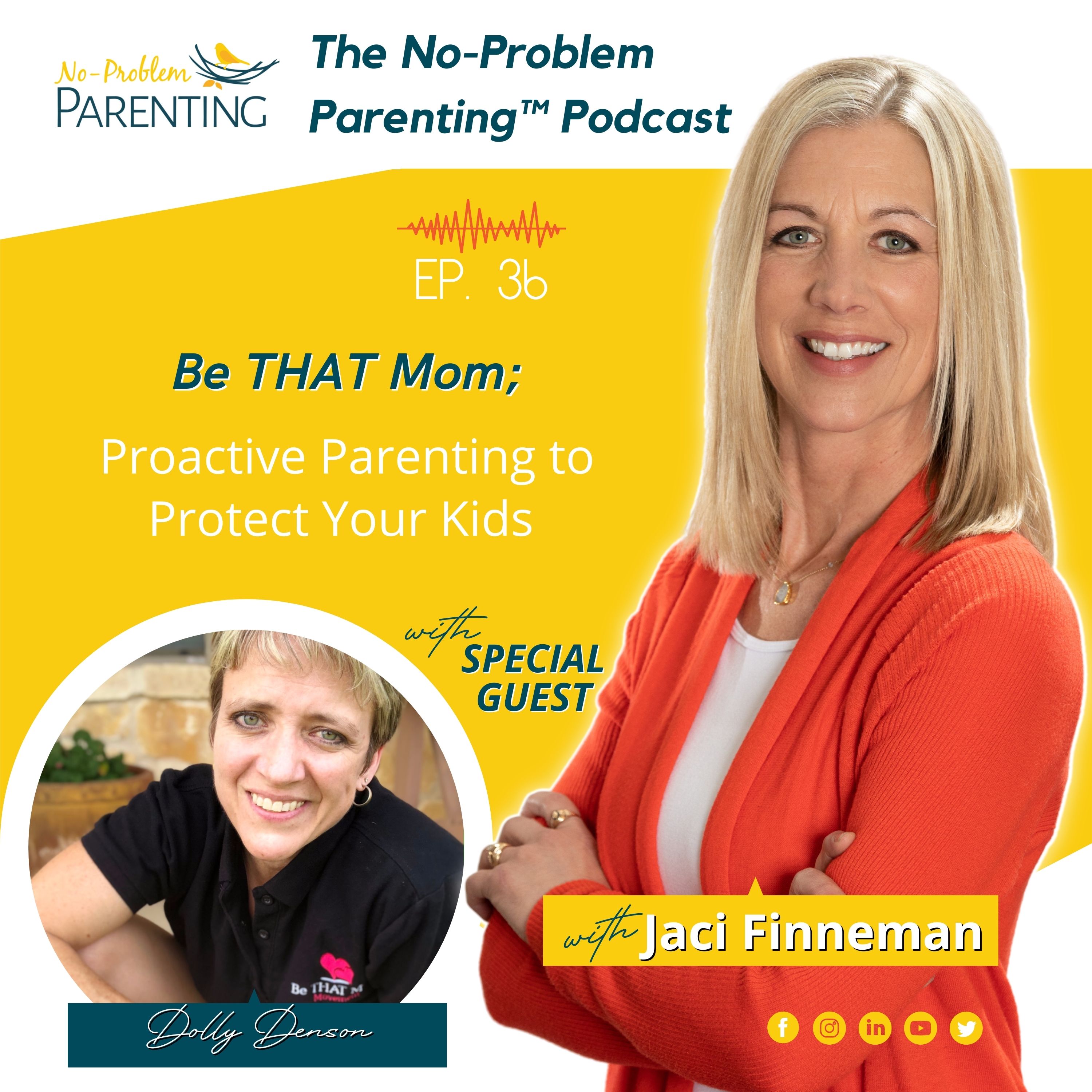
Be THAT Mom Proactive Parenting to Protect Your Kids Online with Special Guest Dolly Denson
About this episode
Hello No-Problem Parents! Sometimes you need to "Be THAT Mom" and THAT is OK!
And, it doesn't have to mean you're "the bad guy".
Dolly Densen is a wife and a survivor of barely getting by while raising three kids and giving her kids technology, cell phones, gaming devices etc, with no guidance or even an inkling of the impact the tech would have on her kids and their relationship.
Become a No Problem Parent Today!
Full transcript
Welcome back to another episode of the No Problem Parenting Podcast, where we choose to deal with and overcome the emotional and behavioral challenges in our home with our kids. So, hey guys, I don't think we can talk enough about digital health and safety when it comes to giving our kids, just first introducing them to technology, much less cell phones and all the apps and all the things that are out there. So I brought on another guest today. Her name is Dolly Denson. She's a wife and a survivor of barely getting by while raising three kids and giving her kids tech with no guidance or even an inkling of an idea of the impact that decision would make when she gave her kiddos those iPhones back in the day.
So with her real mom experience, plus her background as a nurse practitioner and wellness coach, she's passionate about equipping you with the knowledge, tools, and support that you need to be that mom. She's the host of the Be That Mom podcast, and today she's going to talk to us about why being that mom is so important. Welcome to the show, Dolly. I'm super excited to have you here to talk all things digital health.
And the first thing I want to ask you, I want to learn a little bit about your journey and how you got to the place that you are right now. But what inspired you to really embrace and become or to be that mom? You know, I know that a lot of times there's a negative connotation with, oh, don't be that mom. But you've actually started a movement and a podcast around being that mom.
So tell us about that. Oh, my goodness. So just put something that a mother goes through that is so heart-wrenchingly hard and kind of you're blindsided by it. And then that is going to cause inspiration for some sort of movement.
I actually, I'm the mom of three kids and they are now 23, 19 and 16. And so if you look at those ages and think back to when they were, you know, like going into middle school, those were the years that the smartphone and all the digital things were really emerging and expanding and their age gaps made it to where the oldest, the second born and the youngest are three to four years apart. And there were massive changes that happened in those years with all the digital things and being a busy mom and nurse practitioner, I worked full time.
I didn't have the time to figure out what I needed to do. And I kind of just was like going on a hope in a prayer that they would come to me. I thought I prepared them enough to where they would come to me for concerns that I would know if there was something going on. And when, what actually happened was I saw the impact more and more with each kid. Um, something subtle, some things, not so much, but it was massive. And for the second born and the third born, um, I just started noticing more of the impact on them in things like self-esteem, their choices in life, their friends, what they decided to do, just everything about them started to change when I gave those digital things. And now they are older and we've come to a place where they are thriving and doing well. So I don't think it is like an all or not doomsday type thing, but we came to the brink of a crossroads to where we were going to be going down a path that was very scary and could have ended one of their lives if we hadn't caught on to what we did when we did. So in that struggle,
I went on social media and I just kind of, I felt so alone and so like, like I was a horrible mother and how could I have let this happen and not see that this was happening? And I made a post on social media just to my tiny little social media following. And I said, please be that mom for your kid so that you are not having to deal with the things that I am dealing with now. And we're at a point where there was so much impact and influence that we didn't realize was happening, that it was like my child was completely out of reach and out of my touch.
My influence no longer mattered. The mindset was in a totally different place. And so I felt so, so very hopeless. And when I made that post, it was amazing how many people came out of the woodwork and they were like, oh my God, I am having the same struggles. You are not alone. Or I'm getting ready to go through those years. What is going on? Can you help me to not do this or not have this happen?
And then some said, I've been there and I am that mom and I've put my foot down and this is what I'm doing. And so it was hundreds of messages that I got on that post in the, in my inbox, people reaching out to me. And so that's when I realized I was not alone and this was a massive problem. And so that, that was my initial inspiration through, I was like, okay, I've got to kind of share what we're doing without, you know, causing like any privacy issues with my kids or shaming them in any way, but just showing other moms that this is a universal struggle. And so that's basically how it all started. What was starting to be concerning to you? And then what did you do? Basically like their choices in friends, their choices in real life. Initially it was just consuming information, things that were being looked at on Instagram,
things that were being interacted with on Instagram and Snapchat. Just the information that's pushed in front of us and pushed in front of them. They were consuming that and it was influencing the way they thought about themselves, who they chose to spend time with in life, what choices they made in life, and all of those things. So it was like the ideals that I put in that I thought I had instilled in them by us going to church and, you know, having a loving family, all the things like eating at the dinner table, turning off the TV while we eat, and different things that mattered to me that when I was growing up, I noticed were helpful for me.
those things no longer mattered. And I was told like, I don't want to go to college. And then just their choices and things. I don't want to be too specific, just their choices in what they were doing. I was suddenly no longer influential. And if that's a natural thing, you know, that happens when our kids grow up and go into the teen years, you suddenly realize that your parents aren't perfect. And so it's kind of like that, but like on steroids, like much more powerful because of all of this information that's at their fingertips, not just in who can contact them and who they can contact, but all the information. Kind of like when we were growing up, I don't know how old you are, but when we were growing up and we had the card catalog at the library and what was in that card catalog, right? So you could only get the information that was allowed in that library. But when we put these digital things that are ever increasingly more intricate and powerful and, you know, invade every aspect of our lives, they have the world at their fingertips and the world can also reach them. So there were subtle little things that were going on that we didn't realize were going on until they came to a head because the, the collision of the mindset and the choices with real world life things, you know, things that are illegal things that, you know, you can't do in the real world, but that was combined with an age where they
didn't have the reasoning ability to realize there were consequences. That's how dangerous it is, you know, to put that, all of that information in their hands. And unfortunately, so many parents do it thinking where they're going into middle school, we need to, you know, be able to stay in touch because they're going to be in sports and they're going to be in this and that. So here's this smartphone and, oh, I'm so glad that I can give that to you. You know, like you feel good.
you're like, I'm giving them a phone and they're going to have fun with their friends and be able to stay connected and see each other's pictures on social media. When you don't realize that that is the age that they don't need that information in their hands. And there's better ways to stay connected than giving the smartphone. What is a good first step in navigating the digital things?
So what I recommend is a kind of a multifaceted approach and it is including your kid in the process. So I'm not an advocate for sneaking around and spying on them, that type of mindset behind it, but having a layered multifaceted approach. So having a conversation with them, first off and saying, you know, this is a tool. It is not something that is yours. It is mine.
And it's going to come to my bedroom at night when I want to have it, I will have it and setting it up to where there are boundaries in place for how they use it, when they use it, where they use it. Um, even some people have like a written contract or, you know, just something written so the kid can see it. Sometimes that's not necessary initially, unless they start, you know, you start having issues, but just, uh, setting up that, uh, layered approach, make a plan for how they're going to use it.
Now, I am not an advocate of smartphones in the hands of kids, um, like middle school age. These things didn't exist when I was making all my mistakes with this, but unknowingly. But, you know, they have the parental control apps. I'm a strong, strong supporter of Bark.
I think that is hands down the best one out there for someone who's in the U.S. or Canada. There are other ones for other countries because Bark's not available in other places.
And then there's dumb smartphone options that are absolutely the best first step. Even if you want to take it back from that, there are watches you can use, like the TikTok watch that has all the interconnectivity stuff. There's also something called a relay go device. It's kind of like a walkie talkie type thing. And so there's ways to stay connected without giving them all of that. But when you're ready to do the smartphone route, that's when I would have boundaries in place for when and where it's used, setting up the parental controls on it to where they can't download apps, they can't delete apps without your approval.
and then having a Wi-Fi router in your home that has parental controls on it. There's just so much to this that sometimes it's so overwhelming. But just taking some simple steps with those types of things will help tremendously and go a long way. And then always realizing that you can course correct, you can shift what you're doing, and that there's going to be this, it's kind of like, what do I want to call it?
like it's evolving. It's not static. It's not going to be, you do this and they do this. They're going to push their boundaries. They're going to be curious. And you know, it's kind of like that on Jurassic Park, that movie where it's like all the, I think it's velociraptors are like testing the fences for the weak points. Well, that's almost like what kids do when they're younger is they're going to test the weak points to try to test where they can get through, where they can get internet access where they can download an app without you knowing, like, it's just a natural thing that they're going to try. So if you just have that awareness in place and can readjust what you're doing and say, Hey, look, I noticed that you're like, Bark will notify you if they do something like that. So, you know, you get a notification and it's like, I noticed that you did this. So I, that was not part of our plan. So let's kind of readjust here. What's going on?
Why did you feel like that was necessary? You know, that type of thing. Right. Nope. That's good. And I too, I'm not a big believer in sneaking around with our kids. I think things should be upfront because the sneakier we are, the sneakier our kids become, right? And it really breaks the trust. And kids get, think that you're being sneaky or that you're trying to trick them even when you're not. So, you know, being very upfront can be super important. And starting that out right from the beginning, when they, when they do get the phone, when they earn that phone and the responsibility of that phone, whether it's a dumb phone or a smartphone or a watch or whatever, just education on it. Here's what's what the phone is capable of. Right. And here are some of the things that could happen that could put a wedge in our relationship with each other. And so let's, let's figure this out. Let's have this conversation so that we don't,
the phone doesn't become a wedge in our relationship and it doesn't pull us apart as, you know, mom and daughter, mom and son, dad and whatever, you know, as a family. So I think that is really good to start with. The other thing, Dolly, I'm going to put it's dollydenson.com, right? And I'm going to put, you have a fabulous resource page on your website, I must say.
So there it's a, it's a great place for parents to go. And some of the things that you've already mentioned here, they can find those resources on that, on that dollydenson.com resource page. I love that. What would you say? Why I should say, why is being that mom so important?
Oh my gosh. So I wholeheartedly believe, and I've seen this in my kids that when we allow them to have just unguided access to all of these things and don't have an awareness around the impact that it will stunt their development, like their childhood development, their discovery in what they're interested in life and what their gift is to the world. I've seen it in my own child that was really diverted into all kinds of things. And when we shut that down and we had to make some really, really hard decisions in terms of pulling away all of the digital things and changing schools and just doing massive life changes.
And it was the hardest thing that we've ever been through as parents. But by us really putting our foot down on what we discovered was going on, it kind of like reawakened interests and things that this child used to do. And he's thanked us and said, thank you so much for what you did. If I wouldn't have, if y'all wouldn't have done the things that you did, I wouldn't have discovered these things that I love to do now. And now he has set his own boundaries up for, I don't monitor things like I used to. We've come to a place where he has a maturity with it. He knows that it's addictive and it's sucking like time from his day. And he has other things that he wants to do real life things out in the world. And so I believe that if we are not guiding them, that this is totally distracting kids and it's just going to keep them from their full potential in the world. And that's such a tragedy because kids are amazing and they are our future. And if we are not allowing them to reach their potential by guiding them, then they're never going to find who they were meant to be and what they're meant to offer in the world.
Yeah, I think absolutely. And I think that that's so true. I, uh, no problem. Parenting teaches really the whole point of no problem parenting is to help parents to become the confident leader that your kids crave you to be. And it doesn't always seem like they crave it, you know, especially when they're challenging your decisions, challenging your direction, challenging your authority. It doesn't seem like they really crave you to be super confident, but they do. And the example you just gave with your son is a perfect example of that. You know, I'm sure the conversation wasn't fun all the time with him. You know, when you did have to put your foot down and step in and make some decisions, taking away a technology or whatever that story was for you. Ultimately you needed to do that. And your son, even though he probably didn't thank you in the moment down the road, he really did. Right. He could recognize that. And that's what I mean by creating the confident leader. Your kids crave you to be, they rely on us to be that mom in those tough times, not their friend, but their supporter and their safety net. Right. Absolutely. I think you were right on with that. Yep. So even though it's difficult in the moment and it, if we stay out of that battle, like just because they're upset that something's being taken away or not given to them, we don't have to get upset back. We can stay calm. They can be upset with us and
we don't have to personalize that and then start, you know, fighting back and forth with them over who's right and who's wrong and explaining why we're doing what we're doing and having this, you know, having this big battle about it. And I think that really begins with, like you said, having that conversation upfront from the beginning, no secrets, you know, no sneakiness about it, just being really direct and upfront and honest with our kids. What would you say is your biggest takeaway when you talk about doing things the more difficult route with raising your kids? I think the biggest takeaway is just having that awareness that it is not benign, that there are impactful things that will happen in insidious and obvious ways. And so we just have to realize that these digital things are put there to distract us, to addict us, to take our mind in certain places. So once we can have that awareness of that, then have that help mold what we do on a day-to-day with guiding our kids. It's no different than putting floaties on them when they're going to learn how to swim or taking a driver's ed course and riding with them in the car as they learn and you're freaking out and you know thinking you're gonna die it's no different than those things we just have to know there it is not benign and that we have to take action and set up boundaries and a plan for how we're going to allow and give all of the digital things what would you
say was the the thing that you made the most difficult when raising your kids I did not know there was any impact. And I thought my biggest worry was like someone reaching out to them, you know, like a predator or something, but not realizing how insidious that is in terms of how the predators that are out there, it's not obvious that they will, you know, make themselves appear to be a kid and they'll find out information about them, gain their trust. And it's just very, very scary how it all happens. But really it was just the lack of knowledge of any of it, But it was also what I say in my podcast a lot is this generation, us generation of parents, a lot of us that are in this space right now for digital safety and health for kids, all of us have kids about that same age.
We were the generation of parents to go through this with no guide and no tools and nothing. It was like a crash course in learning how to do it. And so there has to be a place of forgiveness there for that, too, because we didn't know and we did the best we could at the time. And now we're trying to give back to help the next generation of parents.
Just not having an awareness of the impact of all of these things is what made it more difficult in terms of I just had no guide. I had no tools. We had no dumb smartphones, no dumb watches. We had nothing.
And just not knowing that there was an impact and then not having any sort of guide to help me set up any type of monitoring any of that. We really had nothing back then when the kids were like middle school age. So the tools that are available now just are absolutely gold. I think there's such a gift to parents that we have all of these things and that someone out there has had the same similar struggle and the foresight and knowledge to put these things together for us so that we can use them as tools for the kids.
So definitely harder just because we didn't know what was coming for us. Um, and just believing that my kids could navigate it when they truly, uh, they truly couldn't and kids just can't now it's too intricate and involved, um, for any kid to figure out on their own and not have a negative impact. Well, I think it's so great that you've turned this into, you've taken what you've learned and you're willing to share it with the world, I guess, with other parents.
And so, um, let's talk a little bit about your podcast. You have the be that mom podcast. What kinds of things are you talking about on your podcast? I talk a lot about different tools that you can use, all of the things I've mentioned, many other things.
I have free downloads that you can get off my website, off that page you mentioned, for how to set up kind of a multifaceted layer approach. I'm actually getting ready to release a Be That Mom movement method course. So it's going to be a method you can follow. But I would love for anyone that is in this struggle, which I think most of us are, to check out my podcast because in addition to the tools that I share, I also will share kind of the background on some of the mindset, some of the psychological things that I've learned.
And then I'm trying to bring on more guests. I have a teacher that I'm going to bring on to interview what she's seeing in the classroom and then other things for different age groups. So it's basically just meant to be a hub of resources for you to kind of help you navigate this and to also realize that being that mom is actually an empowerment movement and is a very positive and necessary thing that we all need to do for the sake of our kids' future.
Well, that's amazing. And I love it. And so I know I have lots of listeners who will be checking you out because I get calls weekly on what to do with my kids being on social media or, you know, hibernating in their room and not giving up their phone and arguments about the phone. And, you know, it's just, again, like I said, putting the wedge in the relationship. So this is a very, very needed resource. And I'm so thankful for you to offer it, especially the freebie, which, as I mentioned already, dollydenson.com backslash digital resources.
And I'm going to put all the links to, for parents to get ahold of you or get in touch with you in the show notes. I want to thank you again for being here today, Dolly, and for your mission of really helping parents. So thank you so much for being here. Thank you so much for having me.
All right. Be sure to go to dollydenson.com. I have the link in the show notes that you can join the Be That Mom movement.
It's a movement of moms born out of discovering the hard way that we have to be proactive about protecting our kids in our digital world with this new realm of parenting. So if you're struggling with raising kids in the digital age, if you have a nagging feeling that you need to be doing more, but you don't know what, or maybe you have young kiddos that are asking for tech and you just don't know where to start, go to dollydenson.com, get your free resources and learn so much more about how you can keep your kids safe in this online world.
All right. Thanks for listening, everybody. Are you ready to be that confident leader that your kids crave you to be? Go to NoProblemParenting.com and get started now.
Become the confident leader your kids crave
The method, the community, monthly live Q&A with Jaci, and Celia — your AI guide in the moment.
Start your 14-day free trial Get it on iPhone or sign up on the web