
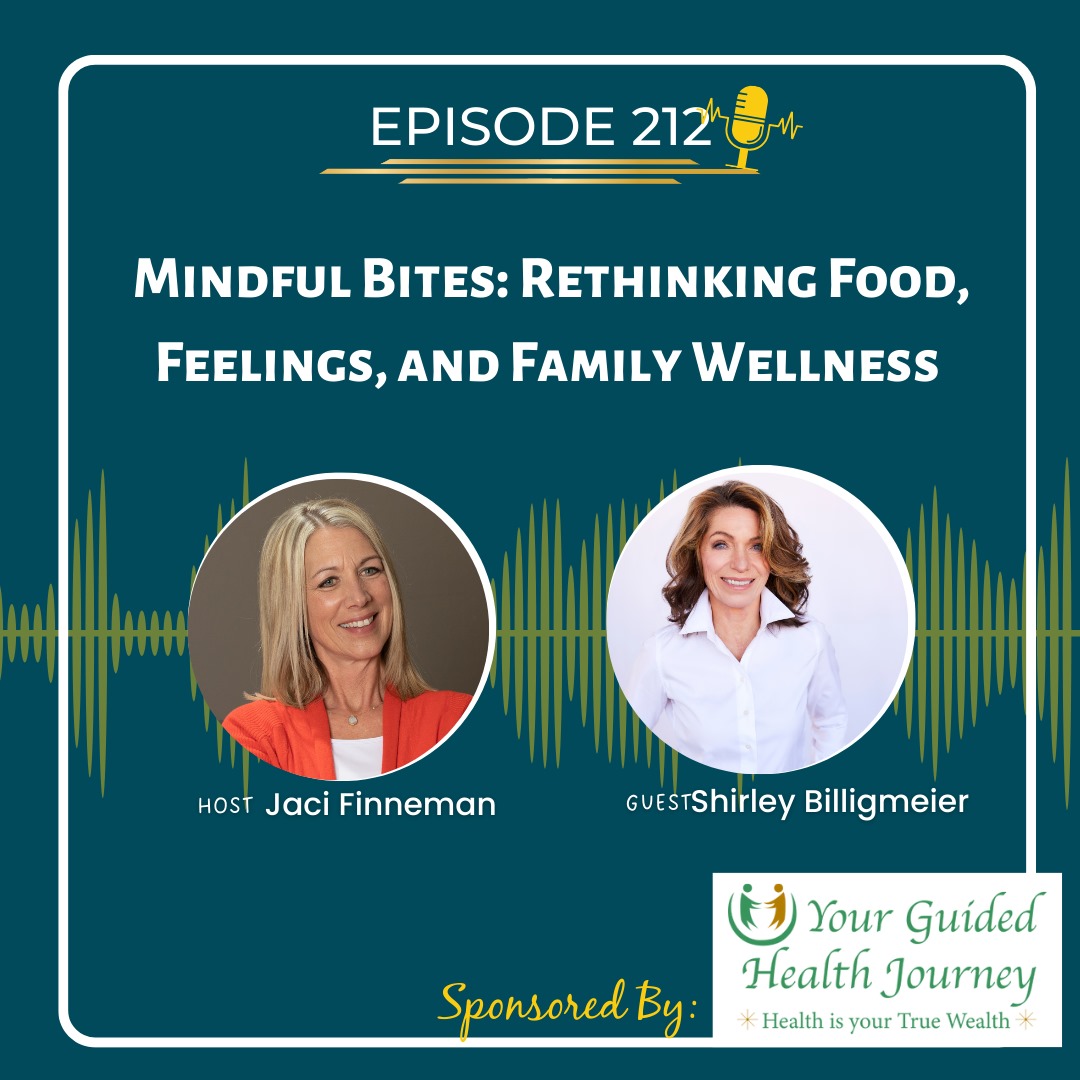
Mindful Bites: Rethinking Food, Feelings, and Family Wellness with Shirley Billigmeier
About this episode
Welcome back, No-Problem Parents!
My guest Shirley Billigmeier, is the mastermind behind Innergetics. Shirley, with over four decades of experience, shares her celebrated methods for creating healthier, more in-tune, and aware kids and parents.
Learn Shirley's tried-and-true methods for creating a healthier, more mindful family.
Discover practical tips to weave wellness seamlessly into your family's routine.
Learn more about Innergetics and how to connect with Shirley:
https://www.linkedin.com/in/shirley-billigmeier-33a49b5/
shirley@wellness-productions.com
Food Sensitivity at Home Lab Testing and Results Review: Your Guided Health Journey Special
__________________________________________________________________________________
Thank you for tuning in to the No Problem Parenting podcast - Please take a minute to share the podcast, comment, or leave a review on your favorite podcast app.
Check out our FREE PARENTING RESOURCES:
60 Ways to Respond to Your Kids without Losing Your Cool
Make it Right Technique PDF
Everyday Essential Solutions eBook for the whole family
Better Sleep: Decrease Stress with the 7-Day free trial of NuCalm Enter Code: NOPROBLEM for 15% off all products.
Become the Confident Leader Your Kids Crave you to be! Put the oxygen mask on yourself first!
Become a No-Problem Parent
Book Your 90 Minute Strategy Session
Find More Resources Here
FB - IG - LinkedIn - YouTube - Twitter - Threads
Check out our Books!
No-Problem Parenting; Raising Your Kiddos with More Confidence and Less Fear
No Problem Parenting; Resources and Stories that Create Confidence and Connection
Hugs and High Fives,
You Got This!
Jaci Finneman
30 Year Counselor turned Parenting Advocate and Coach
Full transcript
All right, welcome back, No Problem Parents. The new year is upon us, and with that typically comes New Year's resolutions or this motivation to lose weight and get back in shape and exercise and do all the things. Well, if you're tired of the diet drama and clean plate battles, in the episode today, we're shaking things up a bit with my guest, Shirley Billigmeyer. She is the genius behind energetics. Today, we're going to talk about how we've been looking at food all wrong. Shirley's going to spill the beans on why it's time to ditch the clean plate club mentality. She'll share the secret to raising kids who listen to their bodies so there's no more sneaking candy and trying to get away with eating foods that they know mom and dad don't want them to eat. We're going to think about candy different so it's not a forbidden fruit,
but a treat that's enjoyed with mindfulness. Shirley helps parents and kids learn how to identify feelings, decoding our mind, body, and emotions so that you don't end up eating your emotions. It's time to break free from food restrictions and embrace a mindful, intuitive approach. Let's teach our kids the power of listening to our bodies and discover how energetics is your guide to a balanced, joyful relationship with food. Kiss Naturals is raising money for the Alex's Lemonade Stand charity. Do you want to keep your kids off the screen and get into some creative stuff? Have them make 100% natural made in Canada lip balms, soaps, bath bombs and lava lip gloss. For every sale between December 14th and December 31st,
Kiss Naturals is donating $5 to Alex's Lemonade Stand. At only $24 or $95 each, please visit kissnaturals.com to get your kids beaming with pride when they complete their first DIY project. Let's raise money together for such an important cause.
Hey there, parents. Thanks for listening to the No Problem Parenting Podcast. Are you ready to become the confident leader your kids crave you to be? Are you losing your crap on your kids, yelling, giving in, and exhausted at the end of every day?
You are already a good parent, and I'm sure you've sought advice from friends or family. You've read books on your child's specific behavior problem. Maybe you've even signed them up to see the school counselor or an outpatient therapist. But despite your efforts to find the right person or thing that will help, your family is still struggling.
You're tired of pretending everything's okay. Well, if your confidence is shot and you feel like you're failing your kids, but you also don't have a ton of time or money, register to become a no problem parent for just $50. It comes with an app so you can listen to the tips and tools just like you're listening to this podcast. You can start building confidence in your parenting immediately, whether your child is a toddler or all grown up and still living in your house.
Don't make this parenting gig harder than it needs to be. Become a no problem parent today. All right, parents, I am super excited to have this conversation today and to introduce you to Shirley Billigmeier. She created Energetics decades before mindful eating was even a term.
And since the publication of her first book, Inner Eating, she's had the pleasure of working with over 10,000 clients on their weight loss journeys. And this is not just adults, this is kids and adults. She's also had over four decades to refine energetics and make it a much more comprehensive, holistic solution than mindful eating alone. I am so thrilled to get into this conversation today, Shirley.
Welcome to the show. It's great to be here, Jackie. Tell us why you created Energetics. How did it come to be?
When I was growing up, I was a cheerleader and I had maybe 10 extra pounds, 15. It was always that little angst, like, you know, if I was just a little bit thinner and then you'd kind of go on this little diet, but then it'd come off and then it would kind of creep back on again. And I just thought, wow, every time that I would do any kind of achievement in anything else in life, if I worked a little bit harder at it, it would get better. But with this whole eating thing, it just seemed like there was a never ending battle. And there was always this angst in me that, you know, what is that all about? It just didn't seem like it should be even an issue.
Well, when I went to college and I received my graduate and undergraduate from the University of Minnesota, it was in physical education and health. And I went out and I taught for about six years. As I was teaching, I also discovered that all the young girls were having this issue with eating. And they were talking about what they were eating, what they weren't eating.
They didn't like their body. They had too much weight. And then if they tried to lose the weight, it would come back on. And then they thought, well, if I just didn't eat anything, and then they went the other direction.
so there was all this angst in their energy of while they were living life and I'm just thinking eating was meant to give us energy something is off here it was never meant to drain our energy so my mission then I thought okay after teaching six years I was going to start my family and so when I started I thought okay I had an exercise studio within my home I started that And I thought, I'm just going to start asking my clients what they think about this, what they think about that.
But in reality, I thought, wait a minute, there's something to do with hunger. And then it brought me back to, while my children were infants, I'm thinking, I'm looking at them and going, they know when to start eating. They're hungry. They let me know.
They don't have any nutritional information. They don't care what their diaper size is. They just tell me they are hungry and they tell me and they don't even have words yet. They cry.
And then when they have a stop and I thought, how do they know how to stop? They just, they, they will clench their little lips. They'll spit it out. They had a strong stop.
They didn't care how big I was. They didn't care what degree I had. They didn't care about anything. They wanted to stop and live their life.
And I went, that's it. That is it. our bodies own our eating boundaries. We have just stopped listening. And so that was my mission.
And as I started talking to researchers around the United States and Canada, they all knew hunger was the answer. But then they said, but we're not sure how to get people there. We're not sure how to have them access that. And as the teacher instinct in me, I thought, no, that's my mission.
I need to create a process so that people can comfortably access that hunger. And people just don't know, you know, how much interference there's been, how many times they've been interfered with. And when you think about it, that interference could start way back when they were infants, when the parent decided how much the child should eat instead of picking up those subtle cues from their own child. So that was how I started the whole concept of energetics.
I love it. This is so great. And I even think about with my, I specialize in attachment and think about when feeding a baby, when, you know, breastfeeding, many people still do breastfeed, obviously, but there is the formula fed babies. And oftentimes with formula fed, we're saying, oh, the baby needs six ounces every two hours.
And it's like, but when you're breastfeeding, you don't really know how many ounces your baby's getting. They know how much they need. Right. And so I think about that. A baby's stomach is the size of their fist. So their little fist is about the size of their stomach. Right. And we're trying to put six ounces at one time into that little tiny stomach and the baby's like pushing it away. Or maybe they're overeating. And we're, we're saying because they only need to eat every six hours. And it's like, no, the baby wants to eat every two hours and they want to get a couple of ounces because that's how much feels good.
So I get what you're saying. Even as young kiddos, we're telling them how much to eat and when. They already know. And it was interesting because they've done studies that if they breastfed, there's no rules when you're breastfed.
You don't know how much they know. They know when they're done. So that was an excellent example to show you that that child knows and they know well. And you're right because their stomach is the size of your fist. You're absolutely right.
and then what starts to happen so right away there can be an interference because when you think about that bottle when that hunger that's a feeling how do they know that's a feeling inside that's their start of eating then when that hunger goes away to them oh i ate and then the hunger went away when i ate and then there was the feeling of nothingness well now if they get that little tension on their lips like the bottle being pushed against their lips because the mother is wanting to feed them more and more and more and more. And they go, okay, there's a tension.
They're not deciphering the tours. This tension is coming from another place. If now it's coming from out here. Oh, I wonder if I eat, will that tension go away? Well, guess what? The tension does go away when they eat and they get a hug and they get praise because they ate more. Now we're starting the eating out of order now. And I had a nine-year-old when I would talk about a hunger scale and we can talk about that too. But she said, oh, and this is a nine-year-old and I'm working with her. And she said, oh, I see we've gotten comfortable with uncomfortableness because to eat too much doesn't feel comfortable. I said, you're right. I'm going to use that. You're absolutely right. We've gotten comfortable. And that's the other thing too. We've gotten comfortable with uncomfortableness in our body or think about the clean plate club.
You get praised because you finished all the food on the plate and now you're stuck, but you get a praise because you ate too much. So when I start working with individuals and they have to eat less, we have to reframe that belief and reframe it to being a respect to the body instead of having the external guide them as to what to eat and what not to eat. That's really good. That's really good.
So how do we, let's, we started with the infants. Now we're at nine year old already. In our parenting, we raised our son to not feel like the scarcity mentality or this. No, you can't have that.
And we're restricting like sweets, for instance. We just decided, no, we wanted him to learn from the inside out how much candy he should eat that makes him feel good or not feel good. And so we would leave that candy bowl on the table at Halloween time or at Easter. And it was like, well, when it's gone, it's gone.
And we didn't bring a lot of that stuff into the house anyway. But, you know, my husband and I would crave it or want chocolate or cookies or something, too. So but we just didn't necessarily restrict it from from our son. And so we could leave a candy bowl on the table till the candy was gone.
And he would he had learned because it took him maybe one time where he overate and then he felt really cruddy. And so talk to us a little bit about why it is good to have to kind of teach your kids from an early age to listen to their inner gut brain and their hunger. I love hearing that story because you did it absolutely right. You didn't have any judgment on the candy. You allowed him to feel that eating that much candy didn't feel good. And there was a client that I worked with, a parent came to me and it was their 10 year old daughter and it was right after Halloween.
and they said, oh my word, you've got to work with her. She just ate so much. And, and she's, and they, we've had everything so healthy. And then all of a sudden she gets all this Halloween candy. And I said, ah, okay. Is she feeling guilty because she ate all this candy? Oh, she's, oh, it's so guilty. She said, you know, I'm sorry, mom. I'm just, I shouldn't have eaten all this.
And I said, you know what? We've got to reframe this because she lost the feel that it felt physically uncomfortable to eat that much candy. The rules of eating had covered over her own wisdom of eating too much candy. And sugar always gets the blame because generally that's what you restrict. And then that's what the child wants more of. So I was very happy to hear how you describe how you worked with your son? Well, I also wonder about, you know, parents will say, well, we have to restrict and we have to, well, there, yeah, there are certain things you just don't bring into your home. You know, if your kid loves Mountain Dew, okay, that's great. How does he even know he loves Mountain Dew to begin with when they're that, that young, right? But what do you say to parents around things like that? They go to a birthday party or maybe you're at a county fair, there's soda and there's all these things. How do you even introduce those things or, or Or should you not introduce them?
They're going to figure it out and they're going to learn that they love it. So how do we do that? I think you have some of that stuff in the house so that when they go out, it isn't something that they are going to go out there and, okay, I better get it while I can. There was an interesting study by Janet Palaivi way, way back where there was five-year-olds and they fed, there's two groups or they fed the five-year-olds lunch.
And then they let the five-year-olds into a room and there was lots of candy in there. There was soda pop, whatever, and there were toys and they had all just eaten lunch. So they weren't hungry. And what they discovered was those children whose parents had so emphasized healthy eating and you can't eat this and you better not have this, or they didn't have in their home.
Those children went directly to what they shouldn't have in their minds because their thought was unconsciously, I better get it while I can. And that was key because all of that's going to be out there. It's going to be out there in the world. So it's better that it's there and they can kind of feel what feels good to them. And you can also use that as a guidepost as to how your child is feeling because the child wants to feel good internally. We're value-based. That place inside of us, that good feel where you feel loved and cherished and that good feel, that is a place inside of all of us. Well, the sweets is a pleasure sense. And if they're not feeling pleasant, then they might lean towards a lot of sweets. If you haven't restricted and they're still leaning towards sweets, I always use that as a learning opportunity to see, okay,
What is it within them that's not feeling good? Because that's an opportunity for a parent to teach that there are other four pleasure senses. There's sound. You can listen to music.
There's sight. You can watch things. You can go out in nature. There's touch.
You have all different kinds of things to do with your hands and your feet and their smell, the wonderful smells of different candles. All of those pleasure senses were meant to help us handle discomfort. But if they're using taste beyond its original purpose when they're hungry, because that's how you can teach your child how to keep those boundaries within them, how to respond directly with those boundaries. So if they say they want this candy, well, are you hungry?
You can have that when you're hungry. So let's figure out what else you can do during that time. This is really good. And I think a lot of times when kids are craving sugars or filling their emotional need with food, we tend to go to food as the problem. And then that's where we're spending all our time talking about that problem. So at No Problem Parenting, Shirley, I teach that problems are meant to be dealt with and overcome. And we only give, No Problem Parents, give problems only as much attention as they deserve, and then we keep removing.
So if eating is a problem, right? I love how you're saying there's four other senses. And is it that they're really hungry? Probably not.
What are we going to do to teach them about those four other senses so that we're not hyper-focused on food issues now? And then restricting even more and having long conversations about what they shouldn't have or shouldn't be doing. And so we're actually feeding that problem, adding fuel to that fire and giving it way more attention than it deserves. You describe that beautifully. I truly am very impressed with that because if you focus on the eating, if you're eating when you're not hungry, there's something else that is going on. That's what you deal with. But if you deal with it like they're eating too much sugar and all of a sudden you start restricting sugar, you buried the information.
And so by burying that information, whatever it is that they're uncomfortable about, That's what a parent can teach. Okay, if you know you're not hungry, okay, you're not hungry now. Now, what are you feeling? That's when you really can connect to that child and have that child understand how to handle that discomfort within.
How do you handle it? Is there something you need to talk about? Is there something you need to understand? And when I work with adults, they tell me unbelievably, if my parents had just taught me how to handle discomfort and not use food instead of telling me I shouldn't eat this because now I've gotten too heavy and now we have an eating issue.
Now all our energy is spent on that. So you described it beautifully. Well, thank you. And I want to talk a little bit about your first book.
So, you know, now I think it's more common that we talk about the gut brain and people are more aware of that, but they weren't even back in the nineties. So tell us a little bit about your first book and how that came to be. So in the first book, what I realized after working with my clients in my fitness studio, I started analyzing, OK, how am I going to teach this? How am I going to teach this? And so I did the hunger scale.
So in your clients can now even know how to do this because we all do know it at some level. So if you think of a hunger scale, because that's what's in my first book, if you think of a hunger scale from zero to 10, zero being starved, 10 being stuffed, five, the feeling of nothingness, that hunger has gone away, you're balanced, that feeling you're not hungry yet, and you're not crowded. that feeling is a feeling of balance that is really where we need to stop so if you put your mind in your stomach right now what number on the scale and you can try this too Jackie what number on this hunger scale would you be at in this moment in time I'm probably a three I haven't eaten lunch yet three and you knew it like that everybody does if the audience has tried that They will know what number they are at.
So that was my first tool is to really identify where they are on that hunger scale and to be able to first sit so that they engage your whole being. And then you eat and you say, what is your number at the beginning of your eating? What was the number at the end of the eating? That was how I created this book.
And it was interesting because when I went to publishing it, they jumped on it because there was an actual tool to access hunger. Well, what I figured out through the years is I only had a few tools in the book. And as I developed my course, I thought, okay, I do this intuitively. I just know this. I listened to them from my gut brain. I listened to their gut brain. I can hear when there's interference. I know what interference to change, to turn out, what to turn around, which one to eliminate, which one to create value. And so as I've gone through the years, I developed all these tools. Well, that's how I developed them a course that I can track people, even though I can't see them. And I do what I call a recording card. But in the beginning,
that's how I why I published my first book, because I actually had a tool to access hunger, because there's your there's your boundary, there's your eating boundary. The first book is called inner eating. And I always say recapturing the forgotten joy of eating a movement. But back then it was remove all tyranny. So you've updated the book. Is that what? I've left the book as is.
And what I've done is created a course that adds a ton more tools. But because I spoke from the gut brain, when I published that, there's nothing in there that's different. I've just adjusted the tools and added a lot more tools so that people really feel safe when they start opening up choice because they've restricted their food as a type of boundary. So when I start talking about total choice, there's like a panic, like, oh my word, if I ate exactly what I want to eat, I'd be 300 pounds.
So there's, I create an understanding of why that even happens. Because when all this healthy choices, and think about this, we have more nutritional information than we've ever had in the history of the world. We have more exercise machines than we've ever had in the history of the world. And we are heavier as a world than we've ever been. Why does that happen? I call it because of healthy choices, because you need to eat what you want to eat. And I open up total choice so that you can want a should. It's nutrition at a deeper level, like when your son could feel that too much of the candy didn't feel good.
so I open up choice so that you like I said you can want choice you can choose all foods and I've had clients say to me wow after going through this process I wanted a salad I didn't ever think I would choose a salad because I wanted it I thought I would eat a salad because I should and that's healthy and they said all of a sudden they had that feeling of wanting a salad I have a couple things that have come to mind. One of them is some of the kids I work with, they have food sensitivities and they don't know they have food sensitivities until their behavior starts to show.
And maybe they've run into somebody or hopefully their pediatrician or somebody's turned them on to, Hey, this behavior could be because of a food sensitivity. And I have a couple of kiddos, families I'm working with where the kids are, they've discovered they have a sensitivity to eggs or gluten. The parents are like, I don't know how I'm going to get my kid to not eat eggs. they love eggs, they crave eggs, and I say educate them. And actually, I'm going to take a quick pause before I finish that thought and share this resource with you. Parents, do you find yourself wondering if your child's behavior might be connected to what's on your dinner table? Well, I've got something that could solve this problem for you and your kiddos. Your Guided Health Journeys at-home food sensitivity lab kit and review. It's brought to you by the amazing Melissa Dealy of your guided health journey. It's not your typical health test. It's a journey to understanding how the foods we eat might be influencing our behaviors. We've all been there wondering why certain behaviors persist in our kids, even though we're trying new parenting techniques. Have you ever considered that food could be the culprit? Well, Melissa's program is designed to unravel that mystery, connecting the dots between what you eat and how you feel. So here's the deal. Melissa starts you off with an initial call, setting the stage for success and
helping you order your kit. Then once your results are in, she personally guides you through a review session, breaking down the connections between you or your child's behaviors and potential food sensitivities. Imagine the power of knowing which foods could be affecting your mood, your child's behavior, and your overall well-being. It's been a game changer for me personally and for many of my clients. Visit yourguidedhealthjourney.com or click on the link in the show notes to grab the special no problem parenting offer. It's another no problem parenting resource that's accessible to you right from the comfort of your home. Teach them about what that what it's doing to their body and then help them to explore some other options that are going to taste good to them or that they're going to like. Yeah. And you said it right, because the parent needs to educate. OK, what did that food feel like to you? It's like you let them feel it. What does that feel like? OK,
you want to feel good in your body. You want your parents to teach your children how to handle the physical feel of the food to the body and handle all those feelings that are within the body. So you were absolutely right on to be able to educate them, help them understand that when they ate this food, okay, that didn't feel so good. That didn't feel so good. So that's exactly how I would approached that situation. I had one, it was interesting because I had one client who, when she heard me speak, she said, oh, that finally makes sense. She said, I do have an allergic reaction to, it was, I think it was to milk. She said, but everybody told me not to drink it. And she said, it was like, I was so, was so sick of them telling me not to drink it that I just did it out of spite.
I said, well, you wanted to reclaim your choice because, and she said, then I would drink it, I get sick. And I said, okay, just pretend nobody exists. And let's just feel what your body feels like. So you can feel what you need to eat. That makes allows you to feel good within your body.
That's your choice. No one else knows what you feel like inside your own body. But if we get all this judgment and we get all these rules, we get into reactive choice because food is what sustains your life. That is the one thing that was yours and yours alone. And if you don't own choice, if somebody is telling you something of what to eat, it's almost like you want to do the opposite to establish your identity on this earth. So that's why all those rules of eating rather than educating and guiding and teaching is so much better with food. Because if you start interfering with the choices of eating, there's going to be issues because food is what sustains your life.
And that is the one thing that is yours and yours alone. This is so great. And parents who can go to energetics.com for more information. Shirley has just a wealth of information on the site. You can watch videos, testimonials, check out her courses, and then definitely reach out and connect with Shirley for more information. But again, education is really key with our kids and letting them know that it's not that you're hungry. It's that you're having a feeling about something else. And we need to get to the root of that feeling. Right on. Because it's that feeling underneath the food, the food always gets the blame because it's always easier to analyze the food than to get to the feeling. Yeah, absolutely. I may have to have you back on again another time, Shirley,
because there's so much more that we could have dug into today. But I am grateful to have connected with you. I love connecting with fellow Minnesotans as well. Tell us again how people, the best way for people to get in touch with you.
They can go onto my website and there's a contact me page. They can have a free 30 minute consultation if they sign up for that. I am more than happy. You know, this is my passion.
I just feel that eating was meant to give us energy. We're spending way too much on the wrong path. Absolutely. So parents, if you've got a toddler, a preschool, middle school, teenagers, if you mom and dad listening today are feeling a lack of energy and just don't know how to get it together, if you've tried every diet out there, there's a reason those diets haven't worked.
And Shirley has the answer for you. So go to energetics.com. And I have to spell that word energetics because everybody wants to put an E in its inner.
I-N-N-E-R-G-E-T-I-C-S because it's energy from within out. It's really tapping in to your own eating boundaries. And teaching our kids from the inside out. And that actually helps us then as parents because we don't have to over parent.
We don't have to put extra work in around a bunch more rules and all of that kind of stuff. We can teach our kids to learn it from the inside out. Thanks so much for being with me today. Thank you.
It was fun to be here, Jackie. All right, that's it for today's episode of the No Problem Parenting Podcast. Hey, thanks guys for tuning in. If you found value in today's episode, click the subscribe button and share it with other parents who might need a little boost.
Stay connected on our socials by following at No Problem Parents for more parenting tips and get your free download of the 60 ways to respond to your kids without losing your cool. Go to NoProblemParents.com. Until next time, remember, your confidence comes from embracing both successes and setbacks.
So take a deep breath, embrace the chaos, and remember, you got this. Thank you. Thank you. Thank you.
Thank you.
Become the confident leader your kids crave
The method, the community, monthly live Q&A with Jaci, and Celia — your AI guide in the moment.
Start your 14-day free trial Get it on iPhone or sign up on the web