
Honoring Legacies, Navigating Loss, and Finding Strength in ’My Teacher, My Son’” with Author Nick Shaw
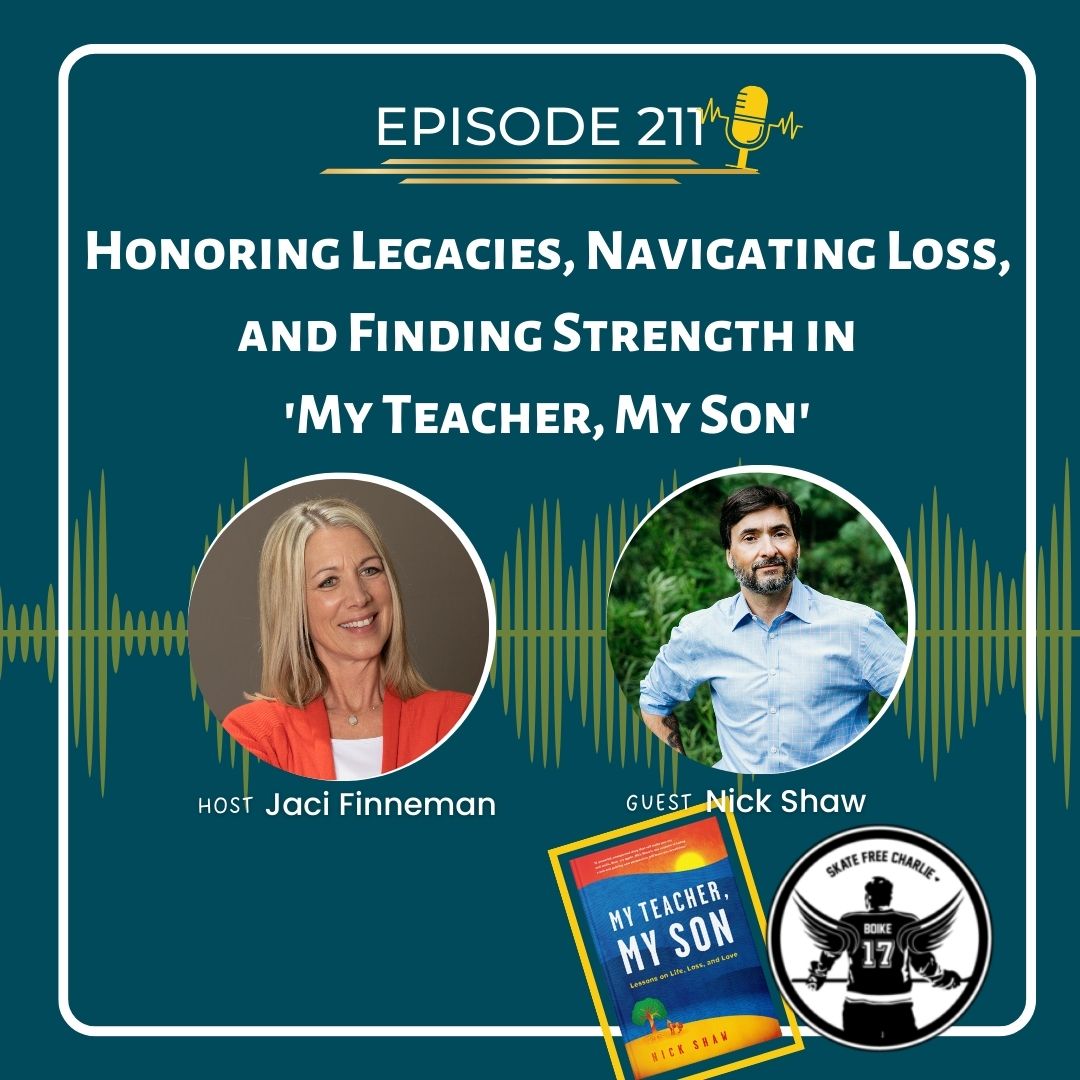
About this episode
Welcome Back No-Problem Parents!
Today my guest Author Nick Shaw and I discuss:
- The importance of being intentional about how we show up in front of our kids and being a positive role model for them.
- The importance of role modeling authenticity and vulnerability for our kids.
- Acknowledging the profound emotional challenges that parents face after losing a child, can you share some insights into the coping mechanisms or daily rituals that helped you navigate the difficult journey of getting up each morning and finding the strength to move forward?
Nick Shaw is an accomplished executive coach, author, and speaker known for his profound insights into personal transformation, self-discovery, and authentic leadership. Through much reflection and soul-searching, Nick has realized a need to help others find ways of living more intentional and meaningful lives.
With the 2023 release of his debut book, My Teacher, My Son: Lessons on Life, Loss, and Love, Nick invites readers to embark on an introspective journey of their own. Through a compelling narrative about his experience of losing his son, William, at just nine years old, Nick’s book stretches the boundaries of the memoir form to teach and inspire its readers and to help them through their own complex emotions and experiences. In the pages of My Teacher, My Son, Nick offers a thought-provoking and supportive guide that urges individuals to examine their lives with honesty and self-compassion. Through poignant anecdotes, Nick encourages readers to reevaluate their choices and embrace a more fulfilling and purposeful existence.
_____________________________________________________________________________
Learn more about Nick and William by clicking the link below:
www.meetnickshaw.com
In Memory of William Shaw: Support and participate in Williams Be Yourself Challenge
______________________________________________________________________________
Today's episode is a special dedication to someone whose spirit continues to inspire and uplift us – Charlie Boike.
Charlie's memory lives on through the incredible initiative called the "Charlie Boike Skate Free Zamboni Spirit Ride." Today, we're honored to shine a spotlight on this heartfelt project that seeks to spread Charlie's joy and love for life.
Click this link to learn more and Support the Skate Free Charlie – Zamboni Spirit Ride
Let's take a moment to reflect on the power of community and how we can make a difference together. We want to extend our deepest recognition and empathy to all the parents and siblings who have experienced the profound loss of a child. Losing a child is an unimaginable journey, filled with complex emotions and challenges that no words can fully capture.
To parents who navigate each day with strength, courage, and resilience, we see you. To the siblings who carry both the joyous memories and the weight of the absence, we acknowledge your unique journey.
Our hearts go out to every family affected by child loss. You are not alone, and your strength is a testament to the enduring power of love. In today's episode, as we celebrate the memories of Charlie and William, let us collectively hold space for those who carry the heavy burden of grief.
Grief Resources:
https://goodgriefparenting.com/
Thank you for tuning in to the No Problem Parenting podcast - Please take a minute to share the podcast, comment, or leave a review on your favorite podcast app.
Check out our FREE PARENTING RESOURCES:
60 Ways to Respond to Your Kids without Losing Your Cool
Make it Right Technique PDF
Everyday Essential Solutions eBook for the whole family
Better Sleep: Decrease Stress with the 7-Day free trial of NuCalm Enter Code: NOPROBLEM for 15% off all products.
Become the Confident Leader Your Kids Crave you to be! Put the oxygen mask on yourself first!
Become a No-Problem Parent
Book Your 90 Minute Strategy Session
Find More Resources Here
FB - IG - Linked
Full transcript
All right, welcome back to a special episode of the No Problem Parenting podcast, where we navigate the ups and downs of parenthood with an optimistic mindset in the midst of hard times and unimaginable tragedy. Today's episode is a special dedication to someone whose spirit continues to inspire and uplift us all. Charlie Boyk passed away last year on his way home from his hockey game at the age of 17. He also wore the number 17 jersey.
Charlie did nothing wrong, the icy road proved too powerful, even at a slow speed. Charlie's memory lives on through the incredible initiative called the Charlie Boyk Skate Free Zamboni Spirit Ride. Today we're honored to shine a spotlight on this heartfelt project that seeks to spread Charlie's joy and love for life. As part of this memorial, we're encouraging everyone to join us in supporting the Charlie Boyk Skate Free Zamboni Spirit Ride. It's a mission to get Charlie's Spirit on as many Zambonis as possible, not only across the United States, but beyond. This passion project is fueled by Jeff, Charlie's dad, calling upon anyone with associations to lend a helping hand. In return, they're offering stickers to anyone willing to contribute to this cause and keep Charlie's Spirit alive through the Skate Free Zamboni Spirit Ride.
Now, before we dive into today's episode, I want to take a moment to reflect on the power of community and how we can make a difference together both locally and globally. We want to extend our deepest recognition and empathy to all parents and siblings who have experienced the profound loss of a child. Losing a child is an unimaginable journey filled with complex emotions and challenges that no words can fully capture. To those parents who navigate each day with strength, courage, and resilience, we see you. To the siblings who carry both the joyous memories and the weight of the absence, we acknowledge your unique journey. Our hearts go out to every family affected by child loss. You are not alone and your strength is a testament to the enduring power of love. In today's episode, as we celebrate the memories of Charlie and William,
let us collectively hold space for those who carry the heavy burden of grief during this holiday season. Hey there, welcome to the No Problem Parenting podcast. From toddler tantrums to teenage eye rolls, this podcast is your go-to for real deal tips and tools that help you become the confident leader your kids crave you to be. Because let's face it, we don't know what we don't know.
Do you ever wish there was a manual for your kids' behavior? Well, this podcast is the next best thing. With over 30 years and 50,000 hours of real-life experience supporting kids and parents, I'm sharing tips, tools, and resources that will help you in your day-in, day-out challenges in your home. Whether you're knee-deep in diapers, or you're navigating the tween years, or you're launching your child into adulthood, subscribe, hit play, and let's turn your parenting problems into no problem, one episode at a time.
All right, parents, now I am absolutely thrilled to welcome a truly remarkable guest to our show today. Meet Nick Shaw. Nick is an accomplished executive coach, author, and speaker. His profound insights into personal transformation, self-discovery, and authentic leadership have left an enduring mark. With the 2023 release of his debut book, My Teacher, My Son, Lessons on life, loss, and love, Nick invites us into a soul-stirring narrative, sharing the intimate journey of losing his son, William. I'm honored to have you here with us today, Nick. Welcome to the show. Yeah, thank you, Jackie. I'm very happy to be having this conversation with you today.
For the listeners who don't know about my teacher, my son, just kind of give us an idea of why you decided to write the book. Sure, absolutely. So almost five years ago, while we were skiing in Big Sky, Montana. My oldest son, William, died in a totally freaking tragic ski accident. He was a good skier and he didn't die in any crazy challenging run. It was, it really was just something out of the blue. And after he died, as you can all imagine, we went into just, you know, a state of disarray and chaos. You know, our lives were literally turned upside down.
And as I was starting to process my grief, I had this visceral need to make sense out of something that seemed so random and tragic and sort of senseless. And for me, that meant making meaning out of it. And so I just wanted to try to learn as much as I could from what happened to our family so I could live my life differently and then share those learnings with others. Right. So my hope is that, you know, fortunately, not everyone loses their child.
But I think when you when you face tragedy, you can get some really powerful perspectives on life. And I just wanted to share that so others can benefit. You talk about in the book that you're an introvert, your wife is the extrovert. And so many people might have thought that she'd be the one to write the book.
I think being an introvert, someone who's quite at ease going inward and reflecting with myself helped me to process. Right. So, you know, what I would do every every day for probably five or six months after when I would go into his room every morning, I would I would sit, I would meditate, I would reflect on the question, what can I learn from this? And so that that's just something that I'm comfortable doing as an introvert. So it helped me just be with my thoughts.
and then I think the you know the stretch for me is you know normally as an intro I tend to keep those thoughts in my head but I use writing as the outlet to sort of get them out of my head and sort of make them come to life and then as I start to realize that they could be helpful that's when I had the inspiration to write the book because I my profession I'm an executive coach and I work with all manner of different types of people and I realize that many people struggle with similar things that I've struggled with and that, you know, that when I was reflecting on sort of how could I, how could I live my life differently? It had to do with facing some of the limiting narratives and beliefs that I held throughout my life that have gotten in my way. And again, working with many clients, I see many clients deal with the same thing. And I thought, well, why not share that with them? I learned a lot from reading the book. William at just nine years old, when he passed was kind of an old soul. Yeah. So William, William struggled with anxiety. I think right around the age of seven, my wife and I noticed he was an anxious kid. He actually even developed a bit of a tick. He would twitch his neck to one side when he would get nervous. And so we decided to send him to therapy. And then right around, right before his eighth birthday, my wife takes the boys to a Unitarian church in our town and they have like this really great programming for
kids. And they did this exercise where they were supposed to declare a mantra for the coming year, sort of towards the end of the year. And he wrote on a note card in bright red marker, be yourself. I mean, so think about that.
Not even eight years old, this kid declares his mantra, be yourself. And honestly, in that next year of his life, I guess the year that preceded his death, he really sort of grew into who he was. He found his own sense of style. He found sports that he enjoyed.
He just blossomed. And so I think it's just remarkable that he not only declared it, he actually lived it, which to me is a huge inspiration for me as I look to make changes in my own life. I was reading about some of the things that you do that help you kind of navigate this journey of getting up each morning and finding the strength to move forward. Certainly early days being in his room to try to leverage his aura, his spirit, his soul, whatever. I just needed to find that connection to him. And so that was important. And I still do that. I still meditate every morning, sometimes in his room, sometimes in my office, but it's still part of my practice. As far as rituals, as a family, we've developed quite a few rituals. On the 19th of every month, so he died on February 19th, we have tacos every 19th of every month because he loved tacos. That was his favorite food. So we honor him every 19th. We light a candle and honor him and eat tacos um we also are are now avid uh followers of dia de los muertos which is the the mexican day of the dead um celebration which is to celebrate the dead by never forgetting them so we do the whole we set up a what they call an ofrenda which is like an altar with sort of all reminders of who he was and we we put it up every november 1st and we have a big mexican meal that night. And, and, and it's, we have a lot of different traditions where we, we try to keep
him alive. We have pictures of him everywhere in our house. We talk about him all the time. So we've definitely, and everyone does it differently, but our approach was, we want to keep talking about who he was, number one, so, so we can stay connected. But so my middle son, Kai always has an outlet, but, and also my son, Bodie, who's never met his oldest brother will get to know him just in a different way.
I love the traditions of that. I love keeping him front and center in your family. Let's talk a little bit about Kai. He was six and just the devastation of all of this, this tragic accident. And how, how did you help him through this? What kinds of things did he need that you had to offer him that you in, in the midst of your own trauma and grief, it was, it was difficult to do, but you, you found the strength to do it.
Yeah, so a couple of different ways. I think one of the ways I think that was important was letting him grieve in his own way. You know, grief is very personal. And I like to, I've coined the phrase unique grief, right? Everybody's grief is different, depending on who you are, what your makeup is, what your personality is.
and I remember a very distinct moment uh it was maybe the week after William died we were back home uh in Massachusetts and for my wife and and me we couldn't look at pictures of William because it was just it was way too painful and so we had friends over who were helping us plan the funeral and they needed a picture of William for the obituary so I said just take my phone and go find one I didn't want to be part of that and so they did that but then and then somehow the phone had gotten into Kai's hands and um I saw that and I and I walked over and I was like my instinct was I got to get that phone out of his hands I don't want him to feel that pain but then when I walked up to him he had this huge smile on his face as he was scrolling through pictures of his brother and I realized that well yeah I couldn't see William in that in those early days but you know he could and so don't don't take that away from let him do it in his own way and that was a that was a honestly that was a he was role modeling for me right in that moment that there are different ways to do it and this is my way and god i can't wait till the day where i can do that um so that was a pretty powerful moment but letting him do it in his way i think was a big part of it and i also think you know just not being afraid to show you know your pain uh and your vulnerability um you know i think there is an instinct to try to shield a child from that but i think the more
we can role model for them that it's okay to be sad, to cry, to whatever, to be angry, whatever the emotion is, the better, because you don't want to teach them to suppress it, right? Well, absolutely. And then also being able to be vulnerable in front of your kiddos. Well, I think, number one, it's not being afraid to show what might be perceived as weakness, Right. So crying or being sad, I mean, particularly for for men. Right.
At least when I was brought up, you know, men didn't cry and you didn't show sadness. It wasn't sort of what was role model for me. So I had to role model that for him. I mean, you want to you want to teach them that it's all of it's OK. Right.
And you shouldn't. And there is no right or wrong way to be. And sharing your feelings is an important part of being a human being. So I think that was a big one is just, is just, yeah, letting him know that it's okay to have emotions.
Also letting him know that it's okay to make mistakes. I certainly made many mistakes, right? Through the grieving process, because it's the first time I've ever had that kind of loss and gone through that process. Yeah, there's no parenting manual for that, is there?
None. And so I think acknowledging when you make mistakes is a big part of, for me, being vulnerable. William taught you so many things while he was living and, and even now, and again, And it's the title of the book, My Teacher, My Son. You talk about key parenting lessons that you learned from William.
Can you share those with us? Well, I think the biggest, one of the biggest ones is the fact that our children, they look to us, right? We are their mental map of what it means to be an adult, what it means to be a human being. They look at everything we do and they do what we do.
Just ask yourself for anybody who's listening, how many times have you said something and then I sound just like my mother. I just sound like, just like my father. Right. And we do that all the time because we, we take cues on how to be from our parents. And I think with that comes a huge responsibility because for better, for worse, they will take all the good and they will also take all the bad. And so I think, I think for me, that's the, one of the biggest lessons is that we have to be very intentional about how we show up as parents because we are literally shaping human beings and, and we have to be mindful of what we do, what we say will be, will be taken on by them. That's the biggest one. And I think, I mean, I'll echo again, vulnerability, the ability to be able to let your child know when you do make mistakes, because guess what? We're human too.
And we're not, we are not these infallible superhuman people as parents. We make a lot of mistakes. So I think that vulnerability piece is extremely important as well. Another one, I remember a time when I was with William and we went, we were mountain biking and I got lost and I was frustrated and I was getting angry.
And I think naming emotion is an important one too. Because number one, I think it's good practice to teach our kids how to name emotions and connect with their emotions. But also when you are angry, if you tell them that you're angry and you tell them why you're angry, then they don't necessarily necessarily think that you're angry because then it's a different reason. So that, that, I remember that time I was, it was mountain biking and I told him and he just looked at me with accepting eyes. And I think that's an important thing to do as parents. Absolutely. I'm my whole thing at no problem. Parenting is becoming the confident leader that I say our kids crave us to be, but being confident doesn't always mean that you're, you know, everything you're walking through life with ease and you just have all the answers. It's I think part of being confident is letting your kids know when you don't know what to do or when you are sad or when you are frustrated or angry, it's modeling that as well. And then how you're, how you can deal with that situation and overcome it. Yeah, absolutely. Because I get it. We want to protect our kids, right? And we want to paint this picture of this perfect life that has no ups and downs and that your life has been great, but it's not reality, right? Once those kids leave the home, they will realize that there's going to be plenty of opportunities for them to make mistakes and fall on hard times.
And so you have to just prepare them, I think, emotionally to deal with that stuff. Absolutely. Living with intentionality is super important to you and your family as well. How are you intentional today, five years post Williams passing? I think for me, a big part of that is just is being a little bit more mindful of where my focus is, you know, and particularly when I'm with the kids. As we all know, this life is busy. There's a ton of stuff that gets thrown at us, ton of content that gets thrown at us. Our phones are certainly not a big help in the realm of being present but I think it is about just being mindful of when you are with your kids be with your kids don't be with your phone or thinking about what you should be doing for work or whatever else is going on in your life and I get that it's hard because we are very busy but just if you can just remind yourself just make the choice you eat if you are too busy to be with a kid then go do what you have to do as opposed to you know being only half present for your child so I just try to remember that as much as I can. And I certainly make, you know, I certainly fall down on that plenty, but just, again, if I'm with one of my boys or even with my wife or with anybody for that fact, it's just be with them. That's also where's my head going as an introvert. I oftentimes get lost in thought, even though I might be with someone, I'm not necessarily fully focused on
them, but it's just really trying to put my focus on whoever I'm engaging with. You have to be honest with yourself and say, can I be here for my child in this moment? And if the answer is no, then, and maybe in this case, if my wife was in a better place, then I, you know, I draw on her. And so we tag team a bit, right? I think that's one thing is just knowing where, where are you in any given moment? And if you really can't, then don't try to force it because that's probably not the best thing either. Actually, I think that's super key. I think as parents, sometimes we feel like we have to do it no matter what. And, and it's okay to be, I'm not in a good spot. I, this, I'm not the best person for my kiddo right now. So whether that's your spouse you rely on or someone else that you pull in those external supports to, to help meet the needs of your kiddo, I think that's brave. Yeah. And I think we have to let go of this, this sense that we have to be again, the superhuman being for our kids. Cause when, when you are grieving, you are,
you are anything but right at least particularly in those early days so give yourself that grace and allow yourself to not always be able to be there and then when you when you can be there again i think it goes back to just be with them right don't don't make make the choice if you're going to be with them be with them don't sort of have to be there with them i think the other thing is my wife and i did or we declared sort of early on is that we're going to get whatever support we need so we had a family therapist we went to a grief we did everything we need we could in our power to help us move through this thing as productively as possible. And you do talk about in the book that the first grief support group that you went to was a bit of an eye opener for you.
Yeah, yeah, we, so we were desperate to find our tribe, let's say, right, because, you know, there's not a lot of people who lose children. I mean, we're a pretty small minority in this country and so we just wanted to you know you feel very alone right when you when you lost your child and you don't know anybody else who's lost a child because despite everybody's best efforts to be there for you our community was amazing but they didn't know what we were going through right we just needed to be around people who knew we were going through so we we heard of a a support group in the next town over and and uh okay let's give it a try uh and uh we went to that and there was only two two people other than us in there and um both of them were older so i think they'd lost their kids you know oh they were older kids when their kids had passed away um and the moderate that that night he wasn't even the regular moderator the original moderator was sick and he didn't he wasn't available so this guy stood in he was someone who lost a child but must have been in his late late 60s or something like that and he'd lost his child like 20 years ago. So it'd been a long time. And he said something that I will never forget. He said,
there's never been a day in my life since I lost my daughter where I've been able to be happy. And I have to say as, as newbies to grief, newbies to support groups, like for my wife and I, that was, that was just, we were shocked. Right. And I think when we left that, we were like, there's no way we're going to become that guy because that's just not, that's not even an option for us. We have, we have at the time we just had Kai and, you know, we were all in it for Kai. And so, so in a way as tough as it was to hear that it gave us a good model of what we didn't want to be. And so we eventually found another grief group, which was amazing. And just, you know, we found our tribe, so to speak. For those of us who haven't lost a child, I,
I've shared before that my husband and I had two miscarriages, one before our son and one after. However, we didn't those, you know, we heard a heartbeat and then a few weeks later we didn't. So we never got to meet our children, which is much different. At the same time, we have this, you know, this loss of hopes and dreams for our family, you know, and our son being able to have siblings.
It's hard for many of us to relate. And sometimes we get nervous and we don't know how to show that we love you and support you and are there for you because we don't, we haven't experienced it. So we can't, we really truly cannot relate. What was it about your community, your friends, your family that really helped you?
And maybe what didn't? Yeah, it's a great, it's a great question because there was all different versions of what we were engaged with right after that. But I think a couple of things. I think, number one, I think for people who haven't experienced it, there is a, well, I just can't go there.
And that's okay. You don't need to go there. We don't want you to go there. It's not an expectation, right?
Honestly, it's as simple as just being there and listening. And whatever you say, because I've been asked, what's the right thing to say? What I say is it's not what you say, it's how you say it. Allow it to come from the heart.
Allow it to just be authentic. and I remember I was talking to one person and I could tell they were trying to say something. I'm like, there are no words. I kind of let them up the hook, but that was okay because I could sense that they were so present for me and just wanted to be there for me.
And I was like, just don't worry about it. I get it. I know that you're with me and that's enough. And I think that's a big one.
It's just don't feel like you have to say the perfect thing. There's no perfect thing to say to show up as your human self. I think the other thing is, don't be afraid to ask questions about what happened about, about William about the, you know, whoever, whoever has passed because we want to talk about at least that was that was for us I mean obviously different people are different but there is this feeling that well if I bring it up it's going to re trigger them or it's going to remind them like well let me let me assure you that we're never going to forget.
and you know so it's not like you're gonna add more pain to what we're already feeling so um if you're trying to be there for someone who's lost anyone or even or a child then just just be there for them as your full full self we had one uh some very dear friends of ours what they did was amazing they actually went and they sought out the help of a grief counselor and they said how can how can we show up for our friends right which i thought was a beautiful thing to do. One of the things that I have learned over the years is that it's important to not be afraid to say their name. In fact, say their name, say the loved one's name. You know, parents want to know that their child is going to be remembered and is still a part of your life.
And you have memories of them and you want to share those and you want to talk about those. Yes. We love it when people share memories of William or ask us questions about him. That's the best thing ever, right? And even no matter how many years, you know, have passed or if it's random or out of the blue, I love that you're saying that it's okay to give a call or send a text or write an email or, you know, post something on social or whatever that you've had this, this memory of the loved one, because it does make a difference. And it doesn't matter when you do that, right? No, absolutely. I mean, I will tell you this, that one of my biggest fears in my early stages of grief was that I'd forget or that he would be forgotten. And so I think, yes, the more you can ask questions, offer memories that we want our child to be remembered, you know.
And I love that you have a way for people who have never met William, they have an opportunity to learn a little bit more about him and his story and his legacy. And that is through the Williams Be Yourself Challenge, which people can find at williamsbeyourselfchallenge.org. Correct. Yep. Yep.
Tell us a little bit about the mission behind that. Yeah. So where it started was, it actually started with a handful of parents in our town, primarily mothers, because, you know, William, you know, he died when he was nine. And so, you know, his, his friends, right.
It was a huge, I mean, you know, we went away on our winter break. Right. And then he died. And then, so like, you know, like, many families here in the Northeast go skiing and then they came back and they found that a classmate had died. And while the school did everything they did, you know, to provide resources, it had a lot, it's not just one and done, it had lasting impact. And so these mothers started to notice even a year after their kids were still grieving and still struggling with it. And so they felt like they needed to provide some resources to help their kids honor and remember William. And so that's where it started out. And then eventually we expanded sort of not just focusing on grief, but how do we help kids everywhere find the courage to be themselves? And that's really what our mission is, is giving kids the courage to be themselves because it's hard. It's hard to do that in this world we live in. But the earlier we can teach that to them, hopefully it gives a brighter future for them and other generations.
So that's what we do is we create programming for communities to give kids an outlet to be themselves through movement, through community. We have speakers come in and provide resources to parents and educators. So that's all that's all the stuff we do. With a focus on important mental health topics.
You know, for me, after William died, you know, I went into a place where I had to face who I was as a person. and I realized there's a lot of things I've carried from my childhood that maybe haven't served me and have gotten in my way and you know that's one of the reasons I wrote this again working as an executive coach I work with a lot of people and I see a lot of people have their own stuff baggage whatever you want to call it that they deal with and it gets in their way you know my hope and the reason I wrote this book is if that's you then don't don't accept it find ways of moving past whatever is get that it's getting in your way get help right you don't have to do it alone but do something right you you have everyone deserves to have more meaningful and fulfilling lives and and the more we hold on to old narratives and things like that you know it's it's we're not living our best possible lives and and if there's anything that losing william has taught me is you know life is fragile and it literally can can leave you in the blink of an eye. And so make the best of it while you're here. I used to be more of an operations guy, process improvement. That was sort of my original career. And, you know, I kind of got into that career because it's similar to what my father did. And I thought, well, do it, do what dad did and, you know, everything else will be okay. And so I did it for the wrong reason because
I, you know, I stayed in that career for 12, 13 years. I just was never really that happy in it. I was, I was doing okay. And my career was advancing, but I didn't, it had no spark for me.
I was frustrated for many years. And the challenge for me was I knew I didn't like my current career, but I didn't know what I wanted to do. And not knowing where to go kind of was a block for me. And so when William was born, that was kind of sort of the straw that broke the camel's back because here I am holding my newborn son. And I realized that he's going to look to me for what it means to be a man. I mean, you know, I'm his role model. And I didn't want to role model for him that you should be doing anything that you're not even remotely passionate about.
So that was kind of the thing that finally said, OK, you know what? You don't know what you want to do, but that's OK. Just take a leap of faith and go explore. And through a lot of soul searching and reflection, I eventually found my way to coaching.
This year launched with a partner, my own executive coaching and leadership development firm called Mirrorbox Leadership Lab. And we work with executives and executive teams to help them become more authentic and effective leaders. I think it is really important to find your purpose and your passion and it can actually be your job. Absolutely. And I think the question is, is this still feeding me?
If the answer is no, then go find something that does. I think too often people don't pause and ask themselves that question. And then you end up retiring and being like, what just happened to my career? It's kind of taking that moment and reflecting and saying, is this still good for me?
it. Exactly. So Nick, people can find you by going to meetnickshaw.com. They can learn more about your coaching. They can get my teacher, my son, the book. They can learn more about William's Be Yourself Challenge. It's all there at meetnickshaw.com. I just really appreciate you taking the time to be with me today and sharing your story. And I highly encourage parents to go out and get the book. Quite inspiring and such a tribute to William and your whole family.
thank you very much and it was great getting to talk to you and meet you and and uh and and share my story with your listeners all right parents check out the show notes for the links to connect with nick at meet nick shaw.com you can also learn how you can participate in the williams be yourself challenge and how to get a skate free charlie sticker for your local hockey rink zamboni to To the families of William and Charlie, we acknowledge your strength, your love, and your unwavering commitment to keeping the spirits of Charlie and William alive.
In every word spoken, in every shared memory, we find a celebration of life and an enduring bond that transcends time. Because in keeping the memory of our loved ones alive, we find comfort and a profound connection that creates a sense of unity as we navigate the complexities of parenthood together. Remember, parents, you are not alone, and there is strength in both our local and global communities. So until next time, keep parenting with love, intention, and a spirit of resilience.
Hugs and high fives, Jackie.
Become the confident leader your kids crave
The method, the community, monthly live Q&A with Jaci, and Celia — your AI guide in the moment.
Start your 14-day free trial Get it on iPhone or sign up on the web