
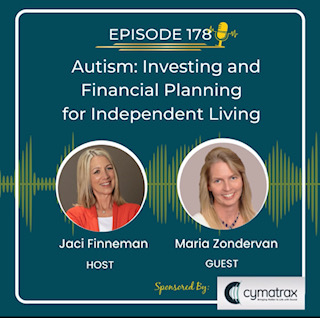
Autism: Investing and Financial Planning for Independent Living with Special Guest Maria Zondervan
About this episode
Welcome Back No-Problem Parents!
Today's guest is on a mission.
Maria Zondervan has a son with autism who may never be able to support himself fully financially and has made it her life’s mission to help others like him, by first helping their parents.
Maria specializes in helping parents of special needs children build a financially secure future for themselves and their children that will last generations.
Get the tools & knowledge needed to secure the future for your special needs child: Gov't Benefits, Guardianship, Special Needs Trust, etc.
REGISTER FOR THE SEPTEMBER 26th @ 7pm ET - FREE Webinar HERE:
NAVIGATING KEY OPTIONS for FAMILIES with SPECIAL NEEDS
There are so many frustrated parents out there without a plan, fearful of the future for their children. Maria guides them into becoming superheroes in their children’s lives. She helps parents become well informed, confident, generous, successful real estate investors, who are financially secure and have a nest egg for themselves and their children.
1. The government isn’t going to take care of your child. Social Security Disability Insurance, HUD, and Medicare in the United States are vastly insufficient to live on.
2. Taking care of a special needs child is many times more expensive than taking care of a regular child – which is already expensive. If you want a quality life, you can’t work 80 hours a week to support your family. You must find a better way to build wealth.
Maria left her biology career after a 26-year tenure to focus on securing a financially stable future for her autistic son through commercial real estate investing. She specializes in recession-resistant assets, such as affordable housing, long-term holds, and value-add apartments that help investors grow their net worth. Through her company, Blue Vikings Capital LLC, Maria helps investors achieve consistent annual returns of 12% or more.
Maria is also the Founder of Valhalla Villas, a non-profit organization dedicated to providing housing and independent living services for autistic adults. She offers investment opportunities in these communities for anyone seeking "forever hold" assets that they can pass on to their heirs, particularly beneficial to special needs parents who wish to ensure the financial security of their children.
Maria's accomplishments demonstrate that financial gain is not the only measure of success; making a positive impact on the world around us is equally important.
Learn more about Maria by clicking one of the links:
https://linktr.ee/bluevikingscapital
https://www.facebook.com/maria.zondervan
https://www.linkedin.com/in/maria-zondervan-b5b61544/
https://www.youtube.com/@bluevikingscapital
https://www.instagram.com/mariazondervan/
Facebook Group: A Bright Future: A Special Needs Community:
https://www.facebook.com/groups/924001701903257
www.BlueVikingsCapital.com
www.ValhallaVillas.org (non-profit)
Thank you for tuning in to the No Problem Parenting podcast - Please take a minute to share the podcast, comment, or leave a review on your favorite podcast app.
Check out our FREE PARENTING RESOURCES:
60 Ways to Respond to Your Kids without Losing Your Cool
Make it Right Technique PDF
Everyday Essential Solutions eBook for the whole family
Better Sleep: Decrease Stress with the 7-Day free trial of NuCalm Enter Code: NOPROBLEM for 15% off all products.
Become the Confident Leader Your Kids Crave you to be! Put the oxygen mask on yourself first!
Become a No-Problem Parent
Book Your 90 Minute Strategy Session
Find More Resources Here
FB - IG - LinkedIn - YouTube - Twitter - Threads
Check out our Books!
No-Problem Parenting; Raising Your Kiddos with More Confidence and Less Fear
No Problem Parenting; Resources and Stories that Create Confidence and Connection
Hugs and High Fives,
You Got This!
Jaci Finneman
30 Year Counselor turned Parenting Advocate and Coach
Full transcript
Hey, welcome back, No Problem Parents. Before we get into today's episode, I just wanna share with you that we have what we call our resource playground listed on our website, No Problem Parents. And the resource playground is developing and ever-changing. We're adding new resources pretty much every week.
And so I encourage you to go check it out, noproblemparents.com. We have resources about parenting, about self-care and relationships, financial planning, school and academic, health and wellness, products and services that we love. So check it out at No Problem Parents. Go to resources. And today I just want to highlight a couple of key resources that are also sponsors of the No Problem Parenting podcast. The first is Dr. JJ Kelly. She is a best-selling author of the Holy Shit series. I don't want to say that in case you have kids in the car. They probably figured it out by now. But Dr. Kelly teaches people emotional intelligence skills so that you don't have to be dependent on doctors and therapists in order to be happy, healthy, and free. If you have a preteen, teen, or young adult, and they're struggling with figuring out who they are,
maybe they're blaming others, maybe they're isolating, Dr. JJ's resources right on the main page of our website. You can click to register your teen or young adult for the Get Real program today. I'm telling you, Dr. JJ gets it. She is a licensed psychologist. She is highly skilled in dbt and for parents who are at their wits end with their teens check out dr jj's resource on the no problem parents page the next person i want to highlight is kohila sieves kohila is the founder of the learning success academy which believes in the limitless potential of every child to learn and thrive with the guidance of her certified learning success coaches children can fearlessly embrace their learning journey if your child just absolutely hates school and they are struggling, whether they are young, whether they are in elementary or they are in college.
Kohila's program, the Learning Success Academy, is going to help them. Her coaches redefine learning through their proven neuro growth holistic coaching methodology, offering exceptional alternative to traditional tutoring and teaching in all subjects at all levels. Learning Success Coaching is also officially accredited and approved by the International Coach Federation. so go check it out and you want to learn to become a no problem parent go to no problem parents.com I'm offering the introduction to no problem parenting course for just $50 get started today and join our community you know over the last couple of years as I've branched out and gotten more involved in the online world and sharing resources and my services I've often felt really salesy about doing that and I've taken advice from coaches and taken a lot of different trainings and I don't know. I think I'm kind of over it. I just, I'm going back to my roots and saying, guys,
I just want to help you in your day in day out struggles and challenges within your home. And with the support of sponsors, not just parenting sponsors, business sponsors, product sponsors, I'm able to share no problem parenting with you at a lower rate. So this isn't some gimmick to be discounting the program to get more sales and all of that. I just truly from the bottom of my heart, I want to pour into you and I want to help you help your kids. So if you're struggling, if you're feeling frustrated all the time, if you're worrying, worrying, worrying, and you're fearing for your child's future and they're only five or maybe they're 15 and you're like, oh my gosh, where's my kid headed? Check out No Problem Parenting. You guys, you're going to love it. And the next big goal for No Problem Parenting is to be able to become that resource playground for you so that parents can call in and in 90 minutes, we're going to figure out your next best steps and we're going to be able to refer you to the resources that fit your family's needs. And again, it takes sponsors to help us do that. So if you're listening and you have a company, a product or a service that benefits kids and families, reach out to us and apply to become a sponsor of the No Problem Parenting podcast and the No Problem Parenting resource playground.
All right, you guys, let's get into today's episode. All right, welcome back No Problem Parents. How many of you listening today have a child on the autism spectrum? Many of my listeners and clients and followers have children on the spectrum. And you're wondering how are you going to support those kiddos as you age and as their needs increase and as they enter adulthood?
My guest today is Maria Zondervan. She has a brilliant son with autism who may never be able to support himself fully financially. And so she's made it her life's mission to help others like him by first helping their parents. Today, we're going to talk about investing and financial planning for independent living in preparation for your child to grow into adulthood. Maria specializes in helping parents of special needs children build a financially secure future for themselves and their children that will last generations. There are so many frustrated parents out there without a plan and they're fearing the future of their children. Maria guides parents into becoming superheroes in their child's life. Today you're going to learn a little bit about why Maria left her biology career after a 26-year tenure to focus on securing a financially stable future for her autistic son. She's going to tell us about the Valhalla Villas, which is a non-profit organization dedicated to providing housing and independent living services for autistic adults.
She also offers investment opportunities in these communities for anyone seeking forever hold assets that they can pass on to their heirs. These investment opportunities are particularly beneficial to special needs parents who wish to ensure the financial security of their kiddos. There's so much we're going to get into today, folks. And I will say there's a lot of information in this episode that may be a bit overwhelming. So I'm going to encourage you right away to head into the show notes, click on the registration link for Maria's September 26th event. It's a free webinar navigating key options for families with special needs. It's at 7 p.m.
Eastern time. We've put a link right at the top of the show notes so that you can go get yourself registered for that event on September 26th, which is going to provide you a lot more detailed information. I'm excited to bring this topic to you today and to introduce you all to Maria. Maria, welcome to the show. Thank you so much for having me. I'm really excited to be here.
You have a son with autism who may never be able to support himself fully financially. And so tell us a little bit more about that in your story and your mission and passion behind Blue Vikings Capital. All right. Yeah. So his name is Carl. He just had his 23rd birthday yesterday.
So it's kind of like, oh, my God, my baby gets to be 23. But yeah, happy birthday, Carl. He kind of speaks up on you. Yeah.
He does. So, yeah. So when he turned 18, he graduated from a school that was all for kids with autism. Right.
So he went to a special school for the last eight years of school. We tried all the public school routes. It was an absolute disaster. He went through like six different schools.
It was a nightmare. We tried the charter schools. We tried everything. and um he we just found he started just disliking himself because kids were mean and they told him he was worthless and i'm sure a lot of your listeners can relate anyone who has special needs kids or disabled kids kids can just be mean to each other and even the even the teachers so it took us a while to find a suitable place for him where he finally got to come out of his defense mode and be him it turns out he was a sweet loving happy um great kid under a lot of stuff he'd been buried under. So that was wonderful. But I think as a parent, you find yourself just struggling through those school years, just getting them through school. Right. And then that 18th birthday hits or whenever they graduate, he was actually 19. But and then you're like, oh, my gosh,
adulthood's here. Like I didn't plan for this at all. Yeah. How'd that sneak up on you?
Yeah. It's like we've been working on this whole childhood thing and school things. It was so laser focused on that that all of a sudden hit me that, you know, adulthood is the biggest part of their life. And there's almost nothing out there to support them beyond school. Like there's support in the school system, not great support, but there's some there. And then all of a sudden, oh, you're in adulthood. We don't just don't even care anymore. Like is what it seems like. I know that's not fully true. It's probably not fair. Well, right. And there's programs up to like 21.
So after you hit that 18 mark, you're like, oh, we've still got another three or four years. And then depending on the diagnosis, that's not for everybody even. So, um, yeah. So I started reaching out, looking what the resources were. You know, he very much, he talked about wanting to live on his own and support himself and do these things. And we're like, is this possible?
Where could he live with maybe some assistance and this kind of stuff? And we found it was very, very limited. There are some places, some wonderful places that offer housing with assistance to special needs individuals. But the waiting lists were like three, four, five years long. It was ridiculous. You know, and they could take maybe 40 residents total at these places.
I'm like, wow, there's a huge need here. There's just an absolute huge need here. And I had started to work more in the real estate space. You mentioned I was a wildlife biologist, right?
So I love that. I was passionate about it. I worked to save endangered species. That was my thing. And yeah, I did a lot. I think I did a lot of good out there. I'd like to think I did.
and it was wonderful and I was passionate about it. But I also knew that as a state biologist, I'd never make a lot of money to support my family. So I've been investing in real estate on the side all along the way, just single family home stuff, rentals, picking them up as we could, that kind of thing. But as this adulthood creeped up on me and I realized this isn't gonna cut it.
This is going too slow. I have to scale. And the way to scale in real estate is by going into multifamily. basically apartment complexes. So I decided to make that pivot and I started attending all these real estate events. And whenever I was talking to him, I was like, wow, someone really needs to do housing for, you know, special needs communities more. And I'd love to do one just for autism.
And I was always talking about this. And then at one event, this guy pulls me over, he goes, you know, every time you talk about that, you light up like, what are you waiting for? Like, why aren't you the person? I was like, oh, I guess that could be me. He's like, you understand real estate, you understand autism, you understand the needs of these parents, like just put it together. You made it sound so simple. Oh, right. It's not so simple. But I did, I went out and I founded a nonprofit organization and started putting all those pieces together, got a great board with people who really understand all aspects of this people who are movers and shakers who have done similar things started special needs schools, like I don't even know where you would start to start a school. Right. But that kind of awesome people. So yeah, we're making it happen.
And the name of the nonprofit? Valhalla Villas, which I know is a mouthful, but Valhalla Villas. So Valhalla is basically the Viking equivalent of heaven, right? It's the Norse heaven, if you will.
My other company is Blue Vikings Capital. So there's a theme here with the Vikings because I was born in Sweden. I know you're from Minnesota where there's a lot of Swedes. Yeah. So that's kind of where all that comes from. Just because we want to make heavenly places for these people. But we didn't want it to sound overly religious either. I don't want anyone to feel excluded or whatever, if they have different belief systems. So we just thought, okay, it's a heavenly place. Let's call it Valhalla.
I love it. It's beautiful. So how long has Valhalla Villas been going? So we've been in existence now for two years.
We've got two developments coming up. So, you know, ground up development takes a while. It's about a three-year process there. We were originally working with government grants to get these done, but that ends up being a six to seven-year process.
And the need was just too great. I didn't want to wait that long. So we've gotten the private sector route. So there's new stuff being built from the ground up, but we also have a model where we are looking to purchase apartment complexes and convert them over to meet the needs of special needs individuals, specifically autism.
And so that's going to happen much sooner. We have identified 18 apartment complexes that meet our needs. Now it's just a matter of convincing those owners to sell to us. We are starting in the Orlando area and in the Tampa area, but our plan is to take this nationwide because it's absolutely everywhere.
You know, the CDC just came out with the latest statistics. Now it's one in every 35 children in the United States is being diagnosed with autism. And that is just an absolutely staggering, staggering number. So this need isn't going away anytime soon.
So that's why we figure we've got to step it up. But one of the reasons we're starting here, not just because I am here and it makes it easier, but the University of Central Florida actually already houses a program called CARD. That's the Center for Autism Related Disorders. So any Florida people, if you're looking for resources, that's a great place if you're not already connected with them.
But they also have an on-campus program that's very similar to what we want to do, where people with special needs, it's not restricted to autism. It's all sorts of special needs. But if they're fairly close to maybe being able to live independent, but they still need some of those life skills, they have a program where basically they can come be a college student. They can live in a dorm and it's modeled after, I believe, Miami, University of Miami came first with this with their Best Buddies program.
But they have a college student who's specializing in some sort of special needs, maybe it's special needs education or special needs medicine or therapy, something like that. that needs more close contact, more personal experience with these individuals, they live in a dorm with them, right? So they're getting that benefit. Meanwhile, parents can rest easy knowing there's somebody else in that dorm with them. So, you know, it might be three or four roommate kind of situation in a dorm. And then instead of taking regular academic classes like math, science, reading, they're taking things like personal finance, you know, how do I handle money on my right uh nutrition personal health hygiene all cooking classes social skills yes all those kinds of things that you need to live independently just housekeeping taking care of your place right so they're learning those skills while practicing them right where they live but most of these students can only be in this program for a year to two depending on the situation and then they want somewhere for them to transition where they'll continue to have some support. And then basically, you know, we can start with a really high level of support and then back it down as they become more and more independent. But there will continue to be eyes on them. So that's one reason why it was really good to be able to start here because we can partner with them and they're
looking for something like that. So that could be beneficial. So the places that we've outlined are all within a 15 minute drive to the University of Central Florida, just because that's a really good kickoff point for us. What an amazing program and model, both of these programs. I can see for people who are interested in becoming caretakers, therapists, you know, mental health practitioners, teachers, like anyone that is super interested in exploring their career, working with and supporting people on the spectrum. When I first started in my career, I couldn't learn in college all the things I wanted to learn about attachment disorders. And so I spent a lot of time living with therapeutic foster homes to learn what it's like to live with these children and day in and day out. And so this is like amazing that you guys are doing this or that university is doing it. And then now you're having a program where the students can actually,
when they age out or they complete that program in a year or two, that they have a place to go. That's right. And we will of course take people who have never been through that program, right? We can provide all those same services. And they probably have more college students in these fields of expertise that need this kind of closeness, really getting into the weeds like you're talking about, then they can provide. So we can do that in our complex as well. Right. So they can have the same thing. They get reduced rent. They're kind of, I don't want to say the dorm mom, because that's probably not the right word.
But eyes and ears in there, someone can make sure, hey, let's go to the social event they've got for your group. You know, we got the movie Fridays, pizza movie Friday or whatever, you know, all the events that we'll plan to make sure. One of the biggest problems, as I'm sure you're aware, is that they get really lonely. They have a really hard time making friends, right?
Social skills is such a struggle. But if you continue to have social events and make sure they get there, eventually, even if you just make one friend in life, it can make such a difference, right? So that's kind of the goal is to incorporate not just the physical, you're safe, here's a home that's safe, but, you know, mentally being fulfilled. And there's a job placement that goes into that too, right?
Yeah, it's living. Yeah, it's living and having a purposeful life. That's what it's all about. Not just being put in a group home.
That's right. That's right. Yeah. So we're partnering with local employers to get them employed and that sort of thing too.
So they could say, hey, I paid my rent. I do that. Exactly. Oh, this is so great.
Part of this is so we're buying large apartment complexes, like 100 units or more, and 25% of that will be for special needs. So it's an integrated housing. So they're not feeling like they're living in an institution or something like that. They're just going to go live at apartment complex.
But there'll be other people like themselves and all the services in place. But the cool thing is we're setting this up where the real estate is a private venture and the services that they need is through the nonprofit Valhalla Villas. So because we've got them split like that, parents can actually invest in the real estate where their child is living if they choose to. And others who maybe don't have a child there can also choose to invest there and just feel good about where their investment dollars are going, right?
But the cool thing is that you can set that up to where that investment ends up paying for the child's living expenses. So the cash flow from the apartment complex itself can pay for their rent and meals and other things, depending on how much you invest in, when you invest in all that kind of stuff. But it's kind of a nice way to niche the two together. So you could start investing now in the villas now as your child is growing and you're going to get a return on that investment, which is going to help you pay for their housing expenses and care as they age.
That is brilliant. Yep. Trying to solve all the problems. live on. And then on the flip side, if you're a family that is financially secure and stable, and you've got investments and you have retirement, you have all these things, what happens when you build that wealth? How do you ensure that your kids aren't going to lose that wealth after you pass away? And it's not going to just like take away their inheritance.
Those are all wonderful questions. And I'd say that those are the top tier questions that every special needs family seems to have. And we could spend the next three hours discussing this. So we'll just, well, right. Because even though this program, your program is focusing on people on the spectrum, autism spectrum, this does hold true for any child with a special needs challenge or ability. Yeah. Yeah. So I have a Facebook group called the bright futures, a special needs community. And we can maybe get you the links for your show notes for that.
We have that. Yeah, we are definitely going to have that link. Yeah. And so we offer webinars in there that are, again, open to anybody in special needs.
And we've got one coming up September 26th. And that's that will tackle these things and we'll spend more time on that. But just to highlight some of what you said. Yes.
I sadly know parents who are living in poverty on purpose because they want to make sure their kids get all of these government benefits because they think that makes them somehow more secure. And I hate to see that, like people turning down promotions and turning down great opportunities because they don't want to, you know, trip these thresholds that the government has. But, you know, they could take those benefits away tomorrow for a number of reasons, right?
It could just be a budget thing. So being dependent on that is really sad. There are lots of ways where if you do well and you want to pass down assets to your kids to make sure that they are okay in the future, that you can keep it to where those assets will provide for your children without them technically owning them and counting against them for government benefits, right? So hopefully your listeners know that there are certain income limits that they can't pass up and still keep their benefits. So it does vary a little bit by state, so I don't want to say what they are, but there are also some federal limits. But part of is also what do they own? How many assets do they have? Cars, houses, any of those kinds of things can potentially count against them. But if you put those in a special needs trust so that they're owned by the trust and the child is just a beneficiary of that trust, then it doesn't count against them. And also if they don't have an ABLE account, it does have different names in different states, but it's basically like a 529 account, which is what people usually use for college savings plans, right? They have one of those now for special needs that does not have to be used towards college plans. In most states, it's called an ABLE account. And they can have up to $100,000 in that account and not have account against them. So that is a huge resource that people should be tapping into. And you can even tie that with a prepaid visa where you can allocate
a certain amount of money from that every month goes to their visa that they can use. And you can even specify so much can be used for housing, so much towards entertainment, so much so they don't just go on a spending spree and spend it all in the first day, right? There's different amounts money that you can contribute to their account every year. And then if they have a job, there's able to work part where they can contribute themselves and where their paycheck gets automatically deposited there. This is what my son does right now. And then it could get moved over to that Visa card for them to spend, but it doesn't count against them. If you have a guardianship, it's financial guardianship, for example, for your child, they may not be allowed to own a bank account. ABLE account doesn't count against them. Yeah. Interesting. I did not know that. What about getting money from a cash flowing asset, such as an apartment complex or inheriting money? Does that reduce or jeopardize special needs? Again, depending on how you set it up,
right? So in these apartment complexes that I do, people often leave those to theirs, right? Because the beauty of these is there's professional managers that are managing it. You never have to make any decisions. You're a limited partner. You don't have to go find the asset. You don't have to manage property managers, none of that. You just put money in and you get mailbox money.
And that's kind of perfect for special needs children to inherit, right? But again, if they inherit it directly, that could go against their benefits. But if their trust inherits it. So there are lots of things to consider when you're setting this up. So you should absolutely talk to a financial planner, but not any financial planner. I was just going to say, special needs financial planner, and they're out there and they're good. We're going to have two of them on that webinar that I mentioned, they know how to structure this kind of stuff. So we'll be discussing things like guardianship. When should you have a guardianship? When should you maybe not have a guardianship? Do you want a limited guardianship or full guardianship? Do you want just medical? Do you want financial guardianship? All these kinds of things.
And what are the options if you don't want to do that? Like getting power of attorney for finances, power of medical power of attorney, things like that. Things I didn't know. These folks have opened my eyes to all sorts of things I didn't know. I didn't know that I had been putting this off. This is terrible. I hadn't been applying for social security for my son because he's living with me. And I thought he doesn't need it now. If there's a time when he needs it, we'll apply.
And it's also that positive thinking, right? He's not going to need this. He's going to make this work. He's going to find good employment and he's going to be able to take care of himself.
In reality, I know that's probably not going to be the case, but nonetheless, I've been putting off applying for these things. And they said, well, how old's your son? I said, well, he's 22, getting ready to turn 23 they're like put in your application right now i'm like why they're like if you have the application and even if they're not approved if the application is in before they turn 23 then when not if something happens to me and my husband he can receive our social security not just his but ours that we've been working for our whole life but if your application isn't in me before 23 they can't do that so it's like oh lit a fire under my butt and here's this big huge project i've been putting off thinking it was this monster it took me one hour to get that application and i'm like why did i put this off wow what who knew yeah yeah and i'm sure it'll get rejected most of them do and then you have to fight a little bit but that's okay we're ready for that fight but as long as you've done the application that's all that matters that's all that matters. See who would know that. Didn't know. Didn't know. And there's other benefits too that age 23 is kind of that stepping stone where you have to have some stuff in before age 23. I didn't know. And what about if there's parents listening right now that have adults older than 23? Not all hope is lost. Not all hope is lost. No, there's still a lot of things they
qualify. Most things they still qualify for. Yeah. So let's get into some of those resources that you can offer special needs families?
Well, education is one, right? So we do these webinars. And so this one that's coming up is very much a general overview. It's a good starting point.
And then we will have webinars on each individual topic, right? On all of these things. There'll be housing, you know, what are your housing options? You mentioned group homes.
We've talked about these apartments. Of course, that's going to depend on the level of independence that your particular child is capable of and your finances. Like that's all going to play into there and somewhat where you live. There are parts of this country that have a lot of resources available and parts of the country that have very little.
So it's going to matter. And some parents, they pick up a move because they're like, I can get better resources here and it matters. So we'll discuss things like that. So housing, regular financial planning that we all should do, like putting together your will, what shouldn't you be in there, things like that.
And that a lot of people think as long as I wrote it in my will, that X, Y and Z is going to happen. That's just instantly going to happen. Well, my grandmother passed away two years ago and we're still in probate. Right. You don't want probate. Like, how does your child have money coming to them in the meanwhile?
Well, that probate is going on. Right. So there are some simple things you can go to your bank today. there's a simple form that you can fill out that makes your child or whoever's taking care of your child in the future gives them immediate access to your account upon your death. Like it's just immediately transferred to them, no probate. So I forget what the name of that form is, but there's just a lot of little steps like that that you don't know exist, but putting it in your will doesn't cover you, right? And of course, having everything you own in a trust name already before you pass. And then having that just slide into special needs trust for one child. If you have another child who's maybe not special needs that can stay in the regular trust, just having all that set up. And we all think we have lots of time to do this. I want to think I'm going to live to be 120. The reality is tomorrow is not guaranteed, right? So we need to get these ducks lined up and it can be a lot to bite off. So it helps to have a professional to kind of guide do like, here's step one, just do step one, you know, set up that ABLE account or, or, or, you know, apply for that social security or whatever it might be. I think today, listening to this episode, some parents might feel like they're drinking from a fire hose because we've gone pretty fast with the information. And it is very overwhelming. Anytime we talk about wills and
finances and, and planning and preparing it's, it's sometimes overwhelming to the point where we just don't want to think about it. And so we ignore it. And then something happens. And I think with any child parents, we need to be getting our will together and getting our plan, our poop in a group, as my mom used to say, we need to make a plan to make sure that our kiddos are cared for.
You need to talk to someone that specializes in trust if you want to have everything set up on the front end. And again, this is all overwhelming. People can reach out to me. I can talk them through it. And if you're looking at investing in real estate, because there's a lot of things, if you have a full-time job and you're full-time parent of special needs, like do you have time to take on managing small single family home rentals on the side? Probably not, right? So you can invest in real estate syndications, which provide a really healthy return, but you don't have to do any of the work. But there are different ones that are of different timelines, right? Some only hold for two years and then you got to reinvest it. If something happens to you in that meanwhile, will your child know how to reinvest that money that they've now come into? Or maybe you should think about investing that in long-term holds or at least a portion of your portfolio in a long-term hold. But then people are like, well, what if I need cash right now?
That's why you have to really diversify your portfolio. And I can talk to people about that. And there's no charge to set up a discussion with me. We can just talk on Zoom and just talk through this kind of stuff. I do it all day long. Yeah, right. Well, we have your link tree link. So everything's in there. We'll break out the other links for registering for the event on the 26th.
My last question for you of the day would be how soon is too soon to start planning? There's no such thing. Yesterday was a really good day. I mean, I know that seems like a silly question, but honestly, you know, as you said, you're getting them through school. The focus, So many of us are hyper-focused on the school plan and dealing with the day-in, day-out challenges of that.
And so, but really from the time they're an infant or a toddler, you can begin this process. Absolutely. Well, just like many of us, when our children are first born, we buy that prepaid college plan, right? At that point, we have no idea if they're going to be interested in college.
We just know it's a whole lot cheaper if you start early, right? And you're just maybe paying 19 bucks a month or something. And then if you wait till they're in high school to do it, oh my goodness, college now is really, really expensive, right? So everything is just better the earlier you start.
Same with any kind of investment. It's never too late to start, but you need to start if you want to be able to leave something for them, you know, in case or when the inevitable happens. So happy that we got connected because this is just such a valuable resource that I don't think is talked enough about. and I am all about changing the conversation here at No Problem Parenting and helping parents become the confident leaders I say our kids crave us to be. And not many people feel super confident about their succession plan. And so I encourage parents to reach out to you, Maria, and get in touch with you so that they can really feel confident about the next plan for not just when they're gone, but the next plan for their child as they grow into adulthood. So thank you so much for taking the time to be with me today. Well, thank you so much for having me.
All right, parents, that's it for today. Make sure you head into the show notes. There's a link in there to get registered for the navigating key options for families with special needs. It's a free webinar, September 26th at 7 p.m. Eastern time. So all the information is there and more information about Maria. You can also follow us on Instagram, Facebook, or LinkedIn at no problem parents. For more updates, tips, tools, and resources that are going to help you become that confident leader, I say our kids crave us to be. And I have a quick favor. If you're listening to this podcast on an app that allows you to leave a review, I'd appreciate you doing so. We are already a top 2% podcast and we are looking to grow that to a top 0.5%. Thank you so much for doing so and stay tuned. In our upcoming episodes, we're going to be talking about single parenting,
fatherhood teens as leaders and more for now hugs and high fives you've got this digital audio health by cymatrax
Become the confident leader your kids crave
The method, the community, monthly live Q&A with Jaci, and Celia — your AI guide in the moment.
Start your 14-day free trial Get it on iPhone or sign up on the web