
Become the Confident Parent Your Kids Crave You to Be - Interview with Jaci on the Lead Up for Women Podcast
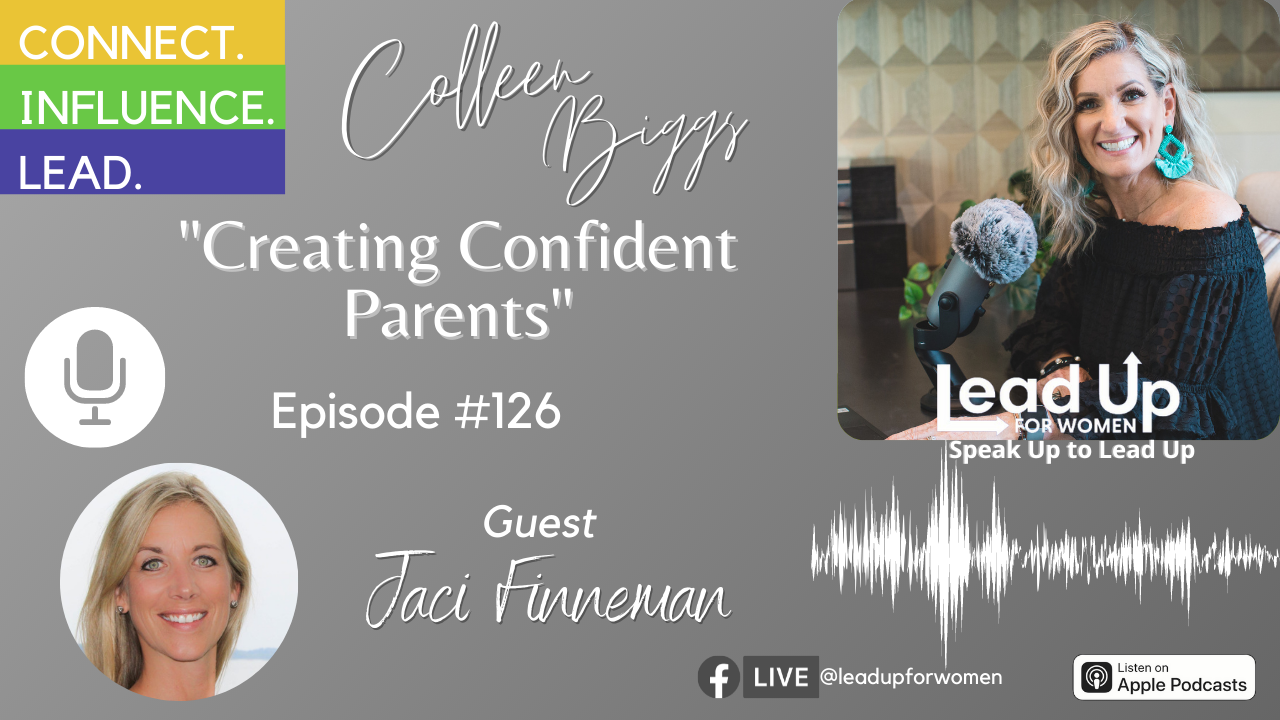
About this episode
WELCOME BACK PARENTS!
Creating Confident Parents!! My mission is to help you Become the confident leader your kids crave you to be! Listen in to my guest appearance where I share more about No Problem Parenting.
Become a Confident Leader for your kids today!
Full transcript
welcome back to another episode of the no problem parenting podcast where we choose to deal with and overcome the behavioral challenges in our home hey you guys confident parents how many confident parents do we have listening today well hopefully by the end of this episode you'll be just that much more confident i am sharing this episode with you today it was actually a recording I was the guest on Colleen Biggs' Lead Up for Women Speak Up to Lead Up podcast.
And so I'm going to be sharing her show notes as well as adding a few of mine. But I'm sharing this conversation that I had with Colleen talking about how to become that confident leader that your kids crave you to be. I want to thank Colleen for any of you women out there, especially women entrepreneurs. Please go check out Colleen's Lead Up for Women community.
I promise you, if you are in business for yourself, if you are maybe the CEO of a company or looking to expand your role in your company, Lead Up For Women is a great resource, a great supportive way for you to get to that next level in your career. So go check out leadupforwomen.com. For now, I just want you to sit back and enjoy the episode, maybe take a few notes.
It was just really fun to be a guest on a podcast and experience that. So thanks so much, Colleen, and enjoy the show. Hello, listeners, and welcome back to another episode of Lead Up for Women, Speak Up to Lead Up. As always, I am your host, Colleen Biggs, and today we are on episode 126.
You can find all information about Lead Up for Women at leadupforwomen.com. So if you are a female entrepreneur and you're looking to be seen, be heard, and be visible, come check us out because we have several platforms for you to be able to step into the spotlight, expand your influence, and attract the right clients, which is why I just published the book, Step Into the Spotlight to Expand Your Influence. So it is available on Amazon.
We encourage you all to go get the printed copy that is now available. Again, that step into the spotlight to expand your influence, to attract the right clients. We also encourage you to go over to our website and download our latest magazine. Our lead up for women magazine was introduced for July and August.
We are working on our September, October issue. And Patti Farmer is the cover. And she is media, money, and marketing. Let me tell you, this lady is a powerhouse.
She has been trained by Damon John, if that gives you an idea. He is one of the sharks in the shark tank. And the month before that, we had Sharon Lecter on the front of our magazine. And for those of you that know her, she's also a powerhouse in financial literacy with Think and Grow Rich.
She worked with Rich Dad, Poor Dad and helped build that brand with Robert Kiyosaki. So again, a legend. I'm so blessed to be able to have these ladies grace the cover of our magazines and share their tips with you. So if you want to read all about them and how you can learn more about financial literacy or marketing and media, please hop in and grab a copy of those magazines for you.
Now, today, I'm really excited about our title that we have. The title that we are doing for today's episode is about creating a confident parent. What is that? I'm a confident parent.
You would say, well, what do you mean I'm not a confident parent? I would say that every single one of us as parents have struggled with confidence of being a good parent throughout our lives of raising our kids. I remember when I was first handed my first baby and they placed her in my arms. I was like, now what do I do? How do I raise this baby?
How do I know that the discipline tactics I use are right or wrong? How do I know if by punishing her, she's going to learn? How do I know if I should have consequences? There are so many questions I have asked myself and trust me as my children are now in their 20s and 30s.
They have shared with me all the areas that I have screwed up in their lives and they share it with me easily. I think I get more of the screw ups than I actually do. Hey, mom, you're a great mom. Right.
I get more of that. Yeah. Well, do you remember when it's like, yeah, I remember that. But what am I supposed to do? I can't change it. Right. That was only 20 years ago.
oh, what am I supposed to do about that now? But you can look back and laugh and just know you did the best you could. But let me ask you this question. What if you're in the middle of raising your children right now, right?
So I'm not raising my children anymore. They're all married. They're living on their own. They have grandchildren.
Obviously I have 11 grandkids, one more on the way. We literally have two boys, two of the youngest boys that aren't married. And so we're excited for when they do get married. But if you're in the middle of raising kids right now and you have a lot of questions, today we're going to be answering those for you because I have Jackie Finneman with me here today and we're going to be discussing creating a confident parent.
So Jackie, welcome to the show. Oh, thank you so much, Colleen. I am so excited to be here to share my message, but just to even be with you today. You just inspire me and motivate me and just, you're just fun to be around.
So thanks for having me. Well, thank you for that. And I can tell you that all of our listeners are going to be heavily motivated by you in being a confident parent today, because we're diving into that head first. But first listeners, let me tell you a little bit about Jackie.
So you can learn a little bit about her before we get started. So she's passionate about helping families find happiness in their day-to-day routines. That is like key number one. We just want to be happy and not frustrated every day, right, with our kids.
She began her career as a paraprofessional serving the needs of children with developmental disabilities. She went on to join a local nonprofit agency that supported children with physical and emotional needs. Jackie was an in-home family counselor and program coordinator for 20 years at the Greater Minnesota Family Services. In her role, she led a value-driven team and supported the launch of multiple new programs.
She spent over 40,000 hours, that is a lot, coaching parents, we've got an expert here of everyone, and counseling kids. It's a highly sought after to assist children with reactive attachment disorder. In 2013, she founded Hello World, which is the company dedicated to awakening family relationships by creating confident parents. Jackie is one of 101st cousins. I have the same type of family, Jackie. She's married to her husband, Eric, of 25 years, lives in central Minnesota with their teenage son, Andrew.
That's pretty impressive for the history that you've had in working with children and working with parents. Let me just dive in and ask the question I'm sure that is on everyone's mind right now. How are we as parents supposed to know if we're doing a good job or not? That is the number one question I think that every parent asks. They don't know, do I put them in timeout? Do I not put them in timeout? How do we know? How do we know if we're raising good, kind kids to grow up and be good citizens, you know, part of society and culture and serving care about others? Well, the short answer is you don't always really, obviously, when kids are doing well and, you know, you're out in public and they're being respectful or they're being polite, you know, or they're getting good grades or they're having, they have friends coming over, you know, those are the signs that, yeah, okay, things are going pretty well. You're doing a good job, but I have to tell you in my 20 years working as a counselor, a lot with child protection, a lot with children's mental health. Parents, you don't really, even if your child is misbehaving constantly and they're getting in trouble, if they're the bully, if they're the one getting kicked out of daycare or kicked out of school or whatever, oftentimes, believe it or not,
we don't think about this, those kids turn out really well. Sometimes the kids that make the most mistakes and have the roughest start or endure a lot of trauma, those kiddos actually turn out really well. And on the flip side, the kids that do everything right, they're super compliant. They're getting straight A's. They have friends, they're sports stars. You know, they have like all these things going from that for them later on, sometimes in those later teenage years, or when they go off to college or, you know, start their careers, they bomb, they, they, they don't know what to do without all of the structure or all of the, you know, all of the, the parents telling them what to do and how to do it and when to do it and compliance and all that.
And they're put out into the real world and, and they kind of bomb out or they fail, you know, and they have a really hard time recovering. So the reason I say the short answer is you don't know, you just do the best you can with what you've got. And in, in my belief, God leads the way and there's, you know, things happen for a reason. I don't always like to say that.
I don't always like to believe that, but sometimes when you're in the middle of like really tough situations with your kids and you're just at your wits end and you feel like nothing's going to get better. I mean, sometimes we think of our five-year-old who's getting kicked out of daycare or having troubles in school. And we think, oh, you know, we're, we're already painting the picture for when they're 18. And it's like, slow down. This is actually a good thing. So, you know, no problem parenting is there to help create confident leaders so that you don't get freaked out by the misbehaviors with their kids. Instead, you can pull up your bootstraps and be ready and let your children know that no matter what behavior they throw at you, you've got this and you're going to be there for them and you're going to help them through it, not solve it for them, but you're going to help them through it. So I love what you said. So, um, all right,
so let's go back because no problem parenting automatically tells me, Hey, it's not that big of a problem. You know, um, the things that are happening, sometimes we blow them out of proportion, like you said, you know, I have, I have some grandkids that all have three or four of them or five of them at a park. One of them will just walk over to the bushes, pull down their pants and start peeing, go back, you know, pull their pants back up and go play where I know some of the other ones were trained that way to just kind of pee in the backyard whenever they needed to when they were younger. But then as they've grown up and now they've been in school for a few years, they don't do that. Right. But the other ones are still younger. They haven't gone to school yet. So they still haven't really broke that habit. Right. So I look at something like that now that I'm a grandma and I've already raised my kids as that is no problem. It is no big deal. Like it, they, so they peed in the bushes. What's the big deal. Someone might've seen their little touch. What, you know, there's no big deal where I've seen other parents just go crazy over it, you know? And again, I do think as parents, we put a lot of pressure on ourselves. So Jackie, let me talk to you as the expert. What is, what is considered, you know, creating a confident parent? What is, what is that to the parent that they know every day that what they're
doing is the best they can do the right thing for the child. And then they just move on because you can't control other people. You can only control yourself. And I'm sure you run into this a lot.
Yeah, for sure. A lot of times parents are calling me that they, like I said, they're, they're sick and tired of their kids misbehaving or they're at their wits end. But let me start with no problem parenting means you're gonna have problems raising your kids that's actually my only guarantee you know with all as an entrepreneur people are like oh what's your guarantee you have to have a guarantee you know for your is you're gonna have problems raising your kids it's a fact of life uh and and some kids throw out or deal us more problems than what we think we can handle uh but really it's saying hey problem i see you over there trying to put a wedge in my relationship with my child, trying to make me feel like I don't have control over this or trying to make me feel like I'm less than, or I shouldn't have been a parent at all.
I see you over there. I got this. No problem. So it helps when parents can learn to handle and deal with problems in a quote unquote, no problem way.
Like, okay, there's this problem. Problems are meant to be dealt with and overcome. It's the definition. If you look up the word problem in the dictionary, it will say an unwanted situation.
that is meant to be dealt with and overcome. And so that's what no problem parenting is saying. We're saying, let's not focus so much on the problem. Let's give it only the amount of attention that deserves.
And then as we say in the Midwest, keep her moving. But what do we do as parents? We have a problem, whether it's a tiny problem, a little misbehavior, a kid peeing in the bushes, or it's a big problem where your child's getting kicked out of school, or maybe they're isolating in their rooms and never coming out and you're really worried about them. We take that problem and we say, what is the root of that?
And then how are we going to deal with it and overcome it? And it's not, not allow it to wreck our whole day, our whole week, our whole year. You know, oh, it can, you know, we don't like the toddler years, the terrible twos are, oh, the teenagers are coming up and we're so dreading those. No problem.
parenting teaches you to look forward to your kids misbehaving because you've got the tools and the resources that even if you don't know what to do in the moment, you can pause, you can figure it out and come back to that and deal with those behaviors and those problems and overcome them. So, yeah. Yeah. So, you know, the phrase, the calm before the storm. Yeah. So what I've seen in some children that are just like, like you said, straight A students, they're everything's great. They're, you know, got the good grades, great friends. They get a, you know, part-time job that you don't have any, any issues with them. And, and they're kind of quiet and maybe, you know, reserved or they're just like the perfect child. Right. That's the calm before the storm. I say that because then I see these, these girls or boys get to college. And like you said, they don't have that structure anymore. They don't have all of that. So what I'm hearing you say and just, you know, my instincts as a parent, the one thing that always played sure for me was to understand how my children were feeling. And I believe communication can be one of the strongest tools that we have. And it takes work. Being a parent's not easy. It takes a lot of time and a lot of work. And having that open communication with your children, having them know that they can trust you and feel comfortable having that open communication with you, even at the age of
too. I do this with my grandkids now, but I realized that I probably have an exuberant amount of patience now that when I was back raising the kids, I had, I felt like I had a finite amount of time and I didn't have time. Yeah. You're not doing their laundry now. You're not, you know, making all their meals. You're not school shopping. You're not. Yeah. Right. Oh, I'm still kind of doing some of that stuff to help out with the other kids, but you're right. I'm so not doing the day-to-day and homework and everything that you do with kids. But, you know, as, as I see when my grandkids are acting out, I literally just pull them aside and ask them what's going on.
Like, how are you feeling? Why are you doing that? What happened? And I just have like a face-to-face conversation, even when they are two and they probably don't even really have a clue of what I'm saying to them or talking through them. They know how they feel. And when you say keywords, like what happened? How do you feel? What do you do? You know, they can express themselves to you. And sometimes that's just the best way, right? To, I don't know. I'm not the expert here. I'm asking you. Absolutely. Kids need to be noticed. They want to be seen and they want to know that they belong and that they matter. And sometimes in our, our stressful, busy, hurried lives. We're just going through the motions and we're just trying to survive the day or get through all the things that we have to do. Much less if you're, you know, you're working and parenting and do so sometimes just the simple thing of stopping to notice and say, Hey, I noticed you look kind of sad. What's going on or what happened? And oftentimes we don't even need to solve anything or fix anything for them. We just need to notice them and recognize it and acknowledge whatever it is that they're feeling or they're going through and then keep moving. So, you know,
it can look like a kid who's just, you know, Bucky and, you know, digging in their heels and not wanting to do anything. You can say, Hey bud, what's going on? I noticed you're kind of Bucky or I noticed you're kind of upset or whatever the feeling is that you're feeling. And you don't have to say it in like a really sad, mushy, sweet, like concerned way. It can just be very matter of fact.
Yeah, you know, I think often today in the last many years, even 10, 20 years, parents have tried to make things easier for their kids. OK, maybe we're going 30 years ago. Right. We don't want our kids to have the hard time that maybe we had growing up.
So we're trying to protect them or rescue them from those things. And that's actually robbing them of the opportunity to learn that tough things happen and we can endure them and overcome them and actually grow and become a more confident, you know, capable human being when we do. So we don't want to rob our kids, you know, of uncomfortable things. But and we don't want to fix it for them.
But we do need to acknowledge and just let them know that we get it. We see that they're hurting, they're upset, they're sad, and we don't always have to have an answer for them either. Like, you know, sometimes kids that are hurting or sad won't go to you because they don't want you to fix it. Instead, they just want you to be there for them and acknowledge them.
So, but as a, you know, a lot of us parents nowadays, we have to make things way more complicated than they need to be. Well, that can't be that easy. You know, I need to have a solution for them or I need to I need to set an example or I need to teach them a lesson, you know, and and tell them all the bad things that could happen or all the good things that could happen. It's like just relax a little bit. And so what I like to say is I help parents become confident, get them off that fear bus that I'm doing it wrong.
I don't know what I'm doing. I can't help my child. I don't know how to help my child, you know, and and just really let them know that it's really not as hard as you think it is, as sometimes you're making it out to be. And I really believe in what you do, Jackie, and how crucial it is, because how they are, how they turn out to be has everything to do with the foundation that's been laid to them, how you've modeled for them, you know, how you've dealt with consequences, how you haven't dealt with consequences.
everything that was modeled and how you raise them really affects them for the rest of their life. And I know that's a huge weight that parents feel, but I've seen it time and time again, even from the little ages, right? Where I've watched my own kids do this, where they said, no, I'm not making you something for dinner. You're eating what we're having. No, I'm not making you something for dinner. You're eating what we have. The child still is complaining 20 minutes later. And they're like, fine, what do you want? And I'm like, why did you just do that?
They're like, because they have to eat. I go, actually, they don't. If they're hungry, they'll eat what you made. They will make that choice. If they don't want it, they won't eat it, but you don't have to make them a separate meal. Now they know that you really don't mean that they have to eat it because if they push hard enough, you'll just make them an extra meal later.
So it kind of moves those boundaries around a little bit, you know, when it's like, no, no, no, no, no, fine. Just get out of my face. Here's the yes, you know? And, and so I'm sure you deal with this a lot, right? What is the age group? Would you say, um, Jackie and hello world with working the parents that you work with now, is it a pretty diverse age group that you're working with of clients? Or do you tend to work with only, you know, mainly two and three-year-olds or is it, Are there ages of groups for like 13 to 15 is a common age and then two to four is a common age or.
Yeah, I would say most of my clients are between the ages have kids because the parents are my clients. They have kids that are between the ages of four to like 15 or 16. However, I serve all families. So zero.
I like to say zero to the 35 year old that's still at home sleeping on your couch. And I have had I have had families that do have 25, 30 year olds living on their couch. And and I don't mean to to, you know, mock that or anything. But oftentimes it's because we're afraid of of pushing our kids a little bit and our adult kids into, you know, scary things and into being self-sufficient.
But and we worry about so many things. I mean, suicide rates are through the roof. And so it can be a very scary thing to be a parent of a child who doesn't feel good about themselves, you know, and so I don't want to make light of that. Four to 15 is probably the most common, you know, age span of parents that I serve.
And I also help companies, you know, managers and, you know, employees. No problem parenting techniques work with anybody that's in a leadership role. So it's really it's really kind of fun. So of course, my job is to focus on the parents, but I do workshops and things for corporate companies too.
You know, there are three steps to no problem parenting. It's not rocket science. It's just three foundational steps that I really believe all parents need in their toolbox. The first is seek first to understand why is my child behaving the way they're behaving and why am I responding or reacting the way I'm responding or reacting?
oftentimes we're triggered because of our own experiences from our upbringing good or bad or indifferent whatever we have these natural triggers because our brain muscles have been flexed in a certain area when somebody yells or argues or shuts down we are just wired to respond to this way or to react this way so we can work on that seek first to understand why are they behaving the way they are and then step two is prepare for the worst i think we can all agree that the more prepared we are for something, the more confident we feel. Right.
And so, so if you know that way, and I know that sounds awful, but so many parents are like, oh, my daughter would never do that. And it's like, um, I'm going to have a talk with your daughter because my daughter's telling me what your daughter's doing. And so it's interesting when it's like, yeah, I did prepare that. Maybe all my daughter's friends were pregnant in high school. Every single one of them wound up pregnant. So I prepared myself, even though I prayed every single day, educated her, taught her, please don't become pregnant. This is not the way that we do this when we start families. And I just prayed every day, but I was prepared. Like I knew if it I've seen it happen, I was preparing for it. So I love that you're, you're being so realistic,
Jackie, like this is so basic, realistic things that parents overlook. I mean, seek first to understand, understand the situation, talk to and communicate with your child, understand why the behavior is happening and then prepare for the worst. The worst that could happen is death. I always say we can't recover from death, but we can recover from everything else. Diseases, Rises, accidents, kids going to prison.
You can recover from all of that. Yeah, and I love what you say too. I love what you say too, though. I have to say this really quick.
Everything's figureoutable. Yeah. And that is true with parenting. So while we can't always be fully prepared, I mean, our kids throw us curve balls, life throws us curve balls, traumatic things happen, unexpected things happen.
We can, for those chronic behaviors or those behaviors that you know, every time you go to the grocery store, the kid's pulling off a candy bar and wants it, you know, I mean, there are things that we can be prepared for so that we're not that, that nagging voice doesn't come out and that frustrated no and yell. And I told you so, and all those kinds of things just don't come out. And if they do, well, we've got a plan for that as well. We, as parents, we make mistakes, the no problem parenting of an online course that I'm in a membership community and in there, in the videos that I recorded, it's just 96 minutes, not a long thing. I talk about how I called my kid a dumbass. I'm a parent coach. I was a counselor for 20 years. Probably not a good idea, right? Like that's probably not one of my most favorite moments. I even asked permission of my son if I could share that in the course. And he said, yeah, mom, he said, for sure do that because it makes you real. You get it, mom. And you're not always perfect and you're not always on. And I think that's another thing with, even if we're prepared for the worst thing that our child, the worst thing that could happen, uh, when it does happen, or if it does happen, it's still going to affect us emotionally. We're still gonna, you know, it's still going to affect us and we can,
we can, uh, figure it out and we can overcome it. Yeah. I mean, you prepare for the worst of having extra money in the bank. You prepare for the worst by having extra food on hand in case there was a drought or something happened and we didn't have access to food. Like, look what happened during the pandemic. I didn't have to go shopping for toilet paper for like four months when everyone else or food and everyone else was freaking out. Right. So you prepare for it, but it doesn't make going through it easy, but you're still well prepared for it. It just, you're right. There's still the feelings. Okay. I'm dying for tip three. You got to share this with us. What's not ready.
Are you ready? Ready. Step number three is to change the conversation. Now, that might seem Captain obvious, but really, by the time you've done step one, seeking first to understand and you've been preparing for the worst.
So you're responding versus reacting. You've already naturally changed the conversation in the home. And that really is the key. And a lot of us. I mean, it sounds simple.
Excuse me. To change the conversation sounds so simple, but it's a lot harder in the moment. right? Everybody can relate to that. Like when you're stressed and when you have all this external stuff coming at you, even if in your mind and you go to bed and I'm going to do better tomorrow, I'm not going to yell and I'm not going to get annoyed and I'm not going to get frustrated stuff still happens. But then even when we make mistakes, cause you're going to, you're going to have problems raising your kids. You're going to make mistakes as a parent.
If you can forgive yourself and still be, and then show them what a confident leader looks like. I messed up. So when I called my son that I don't even like to say it now. Uh, and not that I hadn't heard that language growing up or my parents didn't, you know, mess up or say that stuff to me, but I made it up to him in a big way. I use what I call the make it right technique. I learned it many, many years ago. And so it's not just about saying, I'm sorry to the kid. And then like feeling, you know, appearing really weak and, and sort of incapable when you apologize to your kid Instead, it's I'm sorry for if you're going to start with and I'm sorry, but I'm going to tell him, you know, the other day on the pontoon when you were driving and you weren't paying attention and this other boat was coming.
I freaked out. You know, I got triggered by that. I got scared and I plowed you over and grabbed the wheel and called you that name. And that was wrong. I shouldn't have done that. And I'm sorry. And then I made it up to him.
He got like this plate full of chocolate chip pancakes. You know, he was like 10 years old and that was still a thing for him. So and I would continue to apologize. And at one point he said, mom, it's good.
You're good. I'm OK. But sometimes as parents, we feel even though it's over, we've apologized. We've made it right.
We've done what we needed to do. We're still beating ourselves up for it. And our kids don't need that. They don't want that.
They crave our confident leadership to know that you're OK. And when you can be that confident leader for your kids, you're also more safe. They view it as safety, security, and they trust you more. So if you're saying, for instance, to your teenager, you're giving them all these warnings about going out or driving their vehicle.
And of course, you're going to do some of that stuff. You're going to be like, make sure you're safe, put your seatbelt on, you know, drive the speed limit, watch for cars. I'm not worried about you. I'm worried about the other people on the road, you know, say all those things.
but we don't need to fear our child. What's going to happen to our child before it even happened, because that makes us seem like we're not confident in their abilities either. And then they can't be confident. And then they'll start to do sneaky things or something will go wrong when they're not around us.
And they don't want to tell us because they're worried we're going to freak out. Oh, if my mom only saw that, or, Oh, if my mom only knew that, she'd be freaked out. And you know, that's, We don't want that for a couple of reasons, but I think really the most important reason is because if my child is ever in an accident or drinks, you know, underage or does something really stupid, makes a mistake. I want them, no matter how bad it is and how scared they are to tell me, I want him to be able to make that call and say, mom, I messed up.
Yeah. My kids have done that entire list and more. Yeah. In fact, they've wrecked every vehicle my husband and I have ever had.
And then one of my daughters that backed our, my vehicle into my husband's vehicle in the driveway. She wondered when she was grown up and I had gotten a nicer vehicle, why I wouldn't let her drive it. And I said, well, you ran my vehicle into your dad's vehicle. Why do you think I don't let you drive my vehicle? Why would I let your brother drive it and not you? Well, he's never wrecked any of our vehicles or ever been in an accident. Actually you've been in four.
yeah yeah and so my response to her might have been something like hmm you know that is a really good question you I know you're smart enough to figure that out won't you when you do want you to come tell me and then you just keep her moving because it's like she knows why am I not driving the nice vehicle right little stinker yeah uh she knows so yeah I love I love this um conversation and I know we have to wrap it up but you gave us some amazing tips today on how we can be more confident. And I love the comp being the confident leader. I say this all the time. You have to give yourself permission as the parent to be confident in your parenting, to be yourself authentically, which means you're not perfect and you're going to screw up in areas and you're going to apologize for it because we all do, but you just have to be confident in being you. And the more confident you are and being you, you give your permission to those around you to show up authentically as themselves and be confident in their decisions. You empower those around you. And what better way to be a leader than in your family, with your own children or in your community, right? Where other people are watching you. And that's something for your child to be proud of too, right? When they're like, oh, my mom's the badass. My mom's so cool, you know, because they really appreciate and love you for you. And I know so many times, Jackie, as parents, we put our identity aside of who we are
as a person and all the cool things that everyone's loved about us growing up, right? And all the skills we have, and maybe we do magic tricks, or maybe we were like excellent at softball. We were like a gold medal gymnast or whatever we would ever do, right? We were black belt in karate.
Seems like when you become a mom, you just like all that goes out the window. And I love it when I see moms still embracing who they are, because that shows that they're not just a mom, they're a person and they have individual needs and they have likes and dislikes and wants, and they have hobbies and creative skills. And I think that is something to be admired. So as a parent, I would urge you strongly to be you in every situation. And when we don't know something like, like Jackie said, it's figureoutable. You can figure it out. Marie Farleo wrote an entire book on that, that I highly recommend everyone go purchase and buy because everything is figureoutable if you just take the time to figure it out.
And if you wanna be a confident parent and you feel that you're struggling in that area or you're not connected to your child, she has no problem parenting. Jackie just talked about it in Hello World. No problem parenting is gonna help you realize that first you must seek first to understand, prepare for the worst and change the conversation. So be a confident leader in your family Go check out what Jackie has to offer you.
And she's going to tell us in a minute how we do that. But dive into, you get one chance. I'm just going to share that honestly with my listeners right now. You get one chance.
When my children joke around with me and tell me what I did or how I screwed up their life or how it affected them, I can't go back and change the time and go time travel and change it. I can only apologize today and say, I'm sorry. You're right. I so should have been better at that.
I so should have had more conversations with you in those areas. And I didn't, but I can't change it. If you're a parent raising children right now between the ages of zero and 20, you still have a chance to make the changes. So if you're not feeling like a confident leader in your family, and you're not feeling like you and your child are having a good relationship or good communication, reach out to Jackie and Jackie, tell the listeners, how do they do that?
What do you have them? What do you have for them today that they can at least get started with you? And yeah, so the best way to get in touch with me and to learn all about what I do is to go to hello world, mn.com.
Everything's on that site. You can also go to no problem parenting.com. And then that's where you're going to learn more about the membership community and the online course. But when you go to the hello world, mn.com, you can book a free call with me.
I always offer a free 15, sometimes 30 minute call. Cause I get long-winded and I get so interested in you. Uh, so you can go there and book a free call with me. Um, and then I also have the no problem parenting podcast. Sometimes we don't really think we need, or we're not sure if we need a parenting coach or some extra help, but listen to that podcast. I give tips. I have guests on, on a variety of parenting topics that can just kind of validate what you're doing, or give you some good advice on maybe some ideas of what you can do next for your kids.
It's okay if you don't know how to handle the problems in the moment with your kids. Just like you were saying, Colleen, say to them, I don't know what I'm going to do. So I'm going to have to think about it and I'll get back to you. It shows your kids rather than reacting in the moment.
You can take a break and I'm going to help figure this out. I got to think about it a little bit. Maybe you'll have some ideas. Come see me.
The other thing is if you're in a situation right now as a parent and you feel like, oh, this sounds all cotton candy and sugar coated. And my program is not a cotton candy approach. You guys, we're going to get to the dirt. One of my favorite things to do is go four wheeling in mud and dirt and play and just get all messy and dirty. And I love the feeling after getting all cleaned up. Right. So it's the same as the dirt in your home. Let's get to the dirt and then let's clean it up. Don't feel bad if things are really bad right now. Yeah, there's a solution. There is Yeah. And don't feel like you screwed everything up, right? We're only human. We can only do what the length of what we know. And the one thing I read in the secret of the millionaire mind book that was advice that he got as a child or as a young adult, which changed his life was don't worry if things aren't going the way they should be going right now. It's because you don't know what you don't know. You don't know what you don't know. So stop beating yourself up.
That's why we have this podcast. We're giving you the opportunity to get into the Hello World community, jump into their Facebook group, meet some other parents that are going through exactly what you're going through. That's the thing, right? I'm not surrounding myself right now with moms groups because that's not where I am in my world.
I want to surround myself with grandma groups. I want to surround myself with female entrepreneur women that are building their businesses because that's what season I'm in. So if you're in the season of raising your children, you need to be surrounding yourself with a network of people that are doing the same thing. It's the best support. And what better way to do that than in the Hello World Facebook page?
So thank you so much, Jackie, for being with us today, for sharing these tips, for giving us the confidence to be a confident parent and a leader in our family and know that there is a way for us to do that out there. So thank you so much, Jackie, for everything you brought to our listeners today. It was like so many golden nuggets. I can't even tell you just so many golden nuggets.
And for all of those of you that are listening right now through the podcast, this will be available at the tip of your fingers. So all of her links that she talked about today to get to her website, to get to her no problem parenting Facebook page, they're all available for you here at your fingertips. And for those on Facebook, we encourage you to go to facebook.com and go to at lead up for women. And you can also there see our video, all of the description will be there as well as the links from the show notes today. So Jackie, thank you again for joining us. And I just want to remind all of our listeners, remember you are the only you that's ever been. You are the only you that will ever be. That's it. It's just you. So how you navigate the path you're on in your future, it's up to you. We all have choices. So today I say, choose to be a confident parent.
Thank you, Jackie. Oh, I love it. I love it. That's exactly what we hope for you to become that confident leader that your kids create you to be. Thanks so much again, Colleen, for having me as a guest. Be sure to go to leadupforwomen.com to learn more information about Colleen. You can find Colleen's podcast on your favorite podcast app by searching for Lead Up For Women, Speak Up to Lead Up. And as always, go to noproblemparenting.com so that you can get started and become that confident leader for your kids. All right, for now, parents, hugs and high fives. You got this.
Thank you.
Become the confident leader your kids crave
The method, the community, monthly live Q&A with Jaci, and Celia — your AI guide in the moment.
Start your 14-day free trial Get it on iPhone or sign up on the web